


Vitamin A: Benefits, Food Sources, Deficiency and Daily Requirements
Vitamin A does far more than support night vision, though that is the benefit most people know. It plays a central role in immune defense, skin health, reproduction, and cell growth throughout the body. Here is what vitamin A actually does, where to get it, how much you need, and what deficiency looks like when intake falls short.
Vitamin A is a fat-soluble vitamin, meaning it dissolves in fat and is stored in the liver for later use, unlike water-soluble vitamins that the body flushes out fairly quickly. This storage capacity is part of why both deficiency and excess intake of vitamin A carry real consequences worth understanding.
Vitamin A actually exists in two distinct forms in food, and the difference matters for how you think about food sources and safe intake levels.
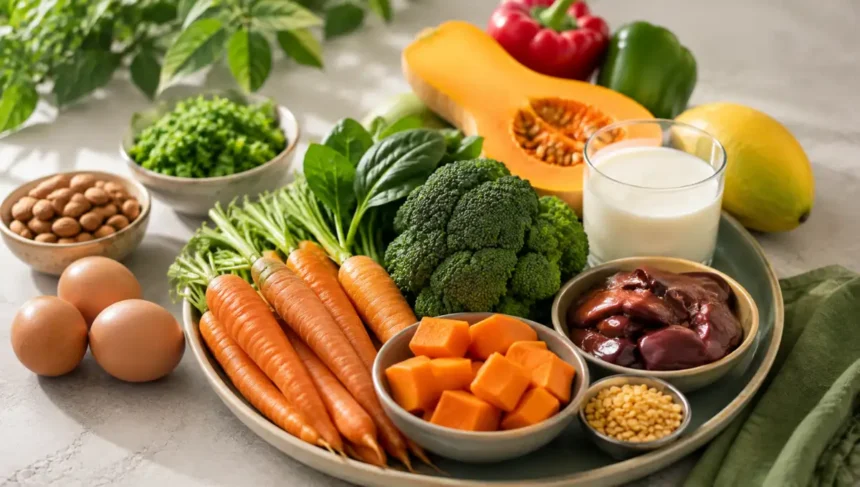
Preformed vitamin A, called retinol, comes from animal sources like liver, dairy, and eggs, and is used directly by the body. Provitamin A carotenoids, most notably beta-carotene, come from colorful plant foods like carrots, sweet potatoes, and leafy greens, and the body converts them into usable vitamin A as needed. This distinction matters because preformed vitamin A can build up to toxic levels with excessive intake, while beta-carotene from food carries no such risk.
What Is Vitamin A and Why Does It Matter
Vitamin A supports several essential functions at once, which is part of why deficiency tends to produce a range of symptoms rather than just one. It plays a direct role in vision, particularly in low light, immune system function, cell growth and differentiation, and reproductive health.
Because it is fat-soluble, vitamin A absorbs best when eaten alongside a source of dietary fat, and the body stores excess amounts in the liver rather than excreting it the way it does with water-soluble vitamins like vitamin C. This storage ability is useful for maintaining steady levels between meals, but it also means chronic overconsumption of preformed vitamin A can accumulate to harmful levels over time, unlike vitamin C or B vitamins, where excess is simply flushed out through urine.
Key Benefits of Vitamin A
1Supports Vision, Especially in Low Light
Vitamin A is a core component of rhodopsin, a light-sensitive protein in the retina that allows the eyes to adjust to dim lighting. This is why one of the earliest and most recognizable signs of deficiency is night blindness, difficulty seeing in low light or adjusting from bright to dark environments.
2Strengthens Immune Function
Vitamin A supports the health of the skin and mucous membranes that form the body's first line of defense against pathogens, and it plays a role in the development and function of white blood cells involved in fighting infection. Deficiency is associated with increased susceptibility to infections, particularly respiratory and gastrointestinal illness in children.
3Supports Skin Health and Cell Growth
Vitamin A supports the normal growth and turnover of skin cells, which is part of why retinoids, compounds derived from vitamin A, are widely used in dermatology for conditions like acne. It also plays a role in wound healing and maintaining healthy skin barrier function.
4Supports Reproduction and Fetal Development
Vitamin A plays an important role in reproductive health for both men and women, and it is essential for fetal growth and development during pregnancy, including organ formation. This is precisely why pregnant women are advised to meet, but not significantly exceed, recommended intake levels, since both deficiency and excess carry risks during pregnancy.
5Acts as an Antioxidant Through Beta-Carotene
Beta-carotene, the plant-based precursor to vitamin A, also functions as an antioxidant, helping neutralize unstable molecules called free radicals that can damage cells over time. This is part of why colorful fruits and vegetables are consistently linked to broader health benefits beyond their vitamin A content alone.
Want more practical, research-backed nutrition guides like this one?
Explore More on HealthzeetBest Food Sources of Vitamin A
The National Institutes of Health Office of Dietary Supplements explains that preformed vitamin A, found in fish, organ meats, dairy products, and eggs, is used by the body directly, while provitamin A carotenoids, found in green leafy vegetables and orange and yellow produce, are converted into usable vitamin A as needed. Beef liver in particular contains especially high amounts of preformed vitamin A, along with certain fortified foods like breakfast cereals and dairy products.
6Animal-Based Sources (Preformed Vitamin A)
Beef liver, fish liver oils, egg yolks, and dairy products like milk, cheese, and butter are among the richest sources of preformed vitamin A. Fortified foods, including some breakfast cereals and margarine, also contribute meaningfully in many diets.
7Plant-Based Sources (Provitamin A Carotenoids)
Carrots, sweet potatoes, pumpkin, spinach, kale, and other dark leafy greens are excellent sources of beta-carotene. Cantaloupe, mangoes, and red bell peppers also contribute meaningful amounts, and cooking these vegetables with a small amount of fat tends to improve absorption of the carotenoids.
According to Dietary Reference Intake research compiled by the National Academies and hosted through the National Library of Medicine, the RDA for vitamin A can generally be met by people following a strict vegetarian diet that regularly includes deeply colored fruits and vegetables rich in beta-carotene, without needing preformed vitamin A from animal sources.
Daily Requirements by Age and Life Stage
Vitamin A needs are measured in Retinol Activity Equivalents, or RAE, a unit that accounts for the fact that the body converts beta-carotene into vitamin A less efficiently than it uses preformed retinol. This is why food labels and supplement facts increasingly use RAE rather than the older International Units, or IU, measurement, and why the same IU number can represent very different actual vitamin A activity depending on whether it comes from retinol or beta-carotene.
Requirements vary by age, sex, and life stage, generally increasing during pregnancy and reaching their highest point during breastfeeding, when vitamin A needs support both maternal health and infant development through breast milk. Infants and young children need considerably less in absolute terms, but their requirements relative to body size remain significant for healthy growth, vision development, and immune function during these early years.
Most healthy adults eating a varied diet reach these targets without much conscious effort, since a single serving of a vitamin A-rich vegetable alongside some dairy or eggs across the day typically covers the full daily requirement.
Signs and Causes of Vitamin A Deficiency
Vitamin A deficiency is relatively uncommon in countries with diverse, food-secure diets, but it remains a significant global public health concern in regions where access to varied nutrition is limited.
8Early and Common Signs
Night blindness, difficulty seeing in dim light, is typically the earliest and most recognizable sign of vitamin A deficiency. Dry eyes, dry skin, and increased frequency of infections, particularly respiratory infections, are also common early indicators.
9Severe and Advanced Signs
Left uncorrected, deficiency can progress to xerophthalmia, a condition involving severe dryness and damage to the cornea that can lead to permanent blindness if untreated. This progression is largely preventable with adequate dietary intake or supplementation where needed.
Research compiled through the National Library of Medicine notes that the World Health Organization has estimated at least 3 million children exhibit xerophthalmia annually, placing them at direct risk of blindness, while an additional 250 million children under age 5 are considered at risk of deficient vitamin A status based on population blood serum data. The source notes that effective, relatively inexpensive prevention options exist, meaning this remains largely a problem of access and program implementation rather than a lack of available solutions.
10Who Is Most at Risk
Young children and pregnant women in regions with limited dietary diversity are at the highest risk globally. In higher-income countries, people with fat malabsorption conditions, such as Crohn's disease, celiac disease, or cystic fibrosis, are also at increased risk, since vitamin A absorption depends on adequate dietary fat.
People who follow very restrictive diets, have had certain bariatric surgeries, or have chronic liver disease may also have a harder time maintaining adequate vitamin A status and can benefit from monitoring their intake more closely with a healthcare provider.
Vitamin A Toxicity and Upper Limits
Because vitamin A is fat-soluble and stored in the liver, excessive intake, primarily from high-dose supplements or very frequent liver consumption, rather than from vegetables, can lead to toxicity over time.
- Symptoms of toxicity can include nausea, headache, dizziness, blurred vision, and in severe cases, liver damage.
- The upper intake level for adults is generally set at 3,000 mcg RAE of preformed vitamin A daily.
- Beta-carotene from food does not cause vitamin A toxicity, though very high intake can cause a harmless yellow-orange skin tint.
- Pregnant women should be particularly cautious with preformed vitamin A supplements, since excess intake has been linked to birth defects.
- High-dose beta-carotene supplements, as opposed to food sources, have been linked to increased lung cancer risk in smokers in some studies.
For most people eating a varied diet, toxicity is unlikely without supplementation, which is why food-first approaches are generally recommended over high-dose vitamin A supplements unless a deficiency has been confirmed. If you take a multivitamin, checking whether its vitamin A content comes primarily from beta-carotene rather than preformed retinol is a simple way to reduce the risk of cumulative overexposure, particularly if you also eat liver regularly or take additional individual supplements.
Quick Reference: Vitamin A RDA by Group
| Life Stage | RDA (mcg RAE/day) | Notes |
|---|---|---|
| Adult men (19+) | 900 | Standard adult requirement |
| Adult women (19+) | 700 | Standard adult requirement |
| Pregnant women | 770 | Slightly increased need |
| Breastfeeding women | 1,300 | Highest requirement, supports infant intake |
| Children (1-8 years) | 300-400 | Increases gradually with age |
| Upper limit, adults | 3,000 | Preformed vitamin A only, not beta-carotene |
Frequently Asked Questions
A Varied Diet Covers Most People's Vitamin A Needs
Vitamin A supports vision, immune defense, skin health, and reproduction, functions significant enough that both too little and too much carry real consequences. For most people, a diet that regularly includes colorful vegetables like carrots and leafy greens, alongside some dairy, eggs, or fortified foods, comfortably meets daily needs without requiring supplementation.
If you notice signs like persistent night vision trouble, frequent infections, or unusually dry skin and eyes, or if you follow a very restricted diet, it is worth discussing vitamin A status with a doctor rather than guessing or supplementing on your own.

Vitamin B12: Benefits, Sources, Deficiency and Daily Requirements
Learn what vitamin B12 does, the best veg and non-veg food sources,…

Vitamin A: Benefits, Food Sources, Deficiency and Daily Requirements
Learn what vitamin A does for your body, the best food sources,…
