


What Is Stress? How Your Body Responds to Stressful Situations
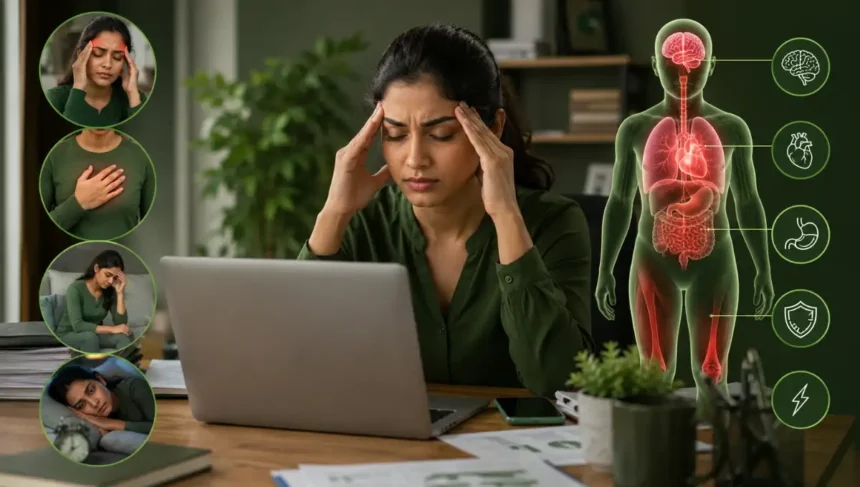
That racing heart before a big presentation, the tight chest during an argument, the sudden alertness when a car swerves too close, all of it is your body running an ancient survival program. Here is what stress actually is, exactly what happens inside your body when it kicks in, and why the same response that once saved lives can quietly work against you when it never fully switches off.
Stress is your body's physical and emotional reaction to a challenge or demand, real or perceived. It is not inherently bad, in short bursts, stress sharpens focus, boosts energy, and can genuinely help you perform under pressure, whether that means reacting quickly to avoid danger or pushing through a demanding deadline. The trouble starts when that same response gets triggered too often, or never fully turns off.
Understanding what is actually happening in your body during a stress response, and why chronic activation of that response causes real health problems, makes it much easier to recognize stress early and respond to it more effectively, rather than simply pushing through it and hoping it resolves on its own.
The NIH's National Center for Complementary and Integrative Health defines stress as a physical and emotional reaction people experience when encountering life's challenges, explaining that the body responds by releasing hormones that produce the fight-or-flight response, raising heart rate, breathing rate, and blood pressure while tensing muscles. Occasional stress is described as a normal, healthy coping mechanism, but long-term, chronic stress may contribute to or worsen a range of health problems, including digestive disorders, headaches, and sleep disturbances.
What Is Stress, Exactly
The NIH's National Center for Complementary and Integrative Health describes stress as a physical and emotional reaction people experience when they encounter challenges in life, explaining that the body responds to stress by releasing hormones that produce the fight-or-flight response, during which heart rate, breathing rate, and blood pressure all rise while muscles tense and sweating increases.
Stress can come from external events, a work deadline, a difficult conversation, a near-miss on the highway, or from internal sources like worry, self-criticism, or anticipation of something difficult. What all stressors share is that your brain interprets them as a demand requiring a response, whether or not there is any real physical danger involved, which is exactly why a stressful email can trigger some of the same physiological changes as an actual physical threat.
Stress vs Anxiety: What's the Difference
These two terms are often used interchangeably in everyday conversation, but they describe genuinely distinct experiences, and understanding the difference can help clarify when something warrants professional attention.
The National Institute of Mental Health explains that stress is generally a response to an external cause, such as taking a big test or arguing with a friend, and typically goes away once the situation is resolved, while anxiety is your body's reaction to stress and can occur even without a current threat, often persisting as ongoing apprehension or dread that interferes with daily life. Both can produce overlapping symptoms, including tension, headaches, and disrupted sleep, but the underlying pattern and duration tend to differ.
In practice, this means everyday stress that fades once the stressful event passes is a normal part of life, while persistent worry that lingers regardless of external circumstances may point toward an anxiety disorder worth discussing with a professional.
The Fight-or-Flight Response, Step by Step
The physical sensations of stress are not random, they follow a specific, well documented biological sequence that begins in the brain and spreads throughout the body within seconds.
1The Brain Detects a Threat
The amygdala, a brain region involved in processing emotion, identifies something as threatening or demanding, sometimes before you are even consciously aware of what triggered the reaction. This signal is sent almost instantly to the hypothalamus, the brain's command center for the stress response.
2The Sympathetic Nervous System Activates
The hypothalamus activates the sympathetic nervous system, triggering the adrenal glands to release adrenaline, also called epinephrine, into the bloodstream almost immediately. This is the fast-acting phase of the stress response, responsible for the sudden racing heart and heightened alertness people notice right away.
3The HPA Axis Sustains the Response
If the stressor persists, a slower pathway called the hypothalamic-pituitary-adrenal axis, or HPA axis, kicks in. The hypothalamus releases a hormone that signals the pituitary gland, which in turn signals the adrenal glands to produce cortisol, the hormone responsible for sustaining the body's alert state over a longer period than adrenaline alone can manage, sometimes for hours rather than the minutes adrenaline typically covers.
4The Body Gradually Returns to Baseline
Once the perceived threat passes, the parasympathetic nervous system helps bring heart rate, blood pressure, and hormone levels back down. This recovery phase can take anywhere from a few minutes to closer to an hour, depending on the intensity of the stressor and individual differences in stress reactivity, and this recovery window is exactly where problems begin if a new stressor arrives before the previous one has fully resolved.
Want more practical, research-backed wellness guides like this one?
Explore More on HealthZeetWhat Happens to Your Body During Acute Stress
During an acute stress response, multiple body systems shift priorities simultaneously, all in service of preparing you to either confront or escape a perceived threat, a coordinated response that happens automatically without any conscious effort on your part.
- Heart and lungs: Heart rate and breathing rate increase, delivering more oxygen to muscles and the brain.
- Muscles: Blood flow redirects toward major muscle groups, and muscles tense in preparation for action.
- Eyes: Pupils dilate, improving visual awareness of the surrounding environment.
- Digestive system: Digestion slows or pauses, since it is not essential for immediate survival.
- Liver: Stored glucose releases into the bloodstream, providing a quick source of energy.
- Skin: Sweating increases, and skin may become pale or flushed as blood flow redirects.
Acute Stress vs Chronic Stress
Not all stress behaves the same way, and the distinction between acute and chronic stress matters significantly for health.
5Acute Stress
Acute stress is short-term, triggered by an immediate event, and resolves once the stressor passes. This is the kind of stress your body is genuinely well designed to handle, and in moderate amounts, it can even support performance and focus, sometimes referred to as a healthy amount of pressure, the kind that helps an athlete perform better in competition or a student focus more sharply before an exam.
6Chronic Stress
A review published through NCBI Bookshelf explains that chronic stress induces sustained activation of the sympathetic nervous system and HPA axis, leading to persistently elevated levels of cortisol and epinephrine. The presence of these stress hormones over extended periods promotes oxidative stress, damage to blood vessel linings, and inflammation, processes that contribute to the development of atherosclerosis and broader cardiovascular dysfunction.
What Chronic Stress Does to Your Body Over Time
When the stress response activates repeatedly without adequate recovery time in between, the systems designed to protect you in short bursts begin working against your health, since these systems were never meant to stay switched on continuously.
- Persistently elevated blood pressure and heart rate increase cardiovascular strain over time.
- Chronically suppressed digestive function contributes to issues like bloating, appetite changes, and irritable bowel symptoms.
- Ongoing immune suppression can increase susceptibility to infections and slow healing.
- Disrupted sleep patterns become more common, which in turn worsens stress reactivity the following day.
- Reproductive hormone regulation can be affected, sometimes disrupting menstrual cycles or libido.
- Chronic stress is linked to a higher risk of anxiety, depression, and other mental health conditions over time.
Signs You May Be Under Chronic Stress
Chronic stress often builds gradually, which makes it easy to dismiss individual symptoms rather than recognizing the overall pattern they form together.
- Persistent muscle tension, headaches, or unexplained aches.
- Ongoing fatigue that does not improve with rest.
- Difficulty falling asleep, staying asleep, or waking up feeling unrested.
- Changes in appetite, either eating significantly more or less than usual.
- Increased irritability, feeling overwhelmed, or difficulty concentrating.
- Getting sick more often than usual or noticing slower recovery from minor illness.
How to Manage Stress Effectively
Since chronic stress stems from the body's alarm system staying activated too long, effective management generally focuses on interrupting that pattern and supporting genuine recovery, rather than simply trying to power through it with willpower alone.
- Practice regular physical activity, which helps metabolize stress hormones and supports a healthier baseline nervous system state.
- Build in consistent, adequate sleep, since poor sleep and chronic stress reinforce each other in both directions.
- Try deep breathing, meditation, or other relaxation practices that activate the parasympathetic nervous system.
- Maintain social connections, since supportive relationships are consistently linked to better stress resilience.
- Identify and address specific, ongoing stressors where possible, rather than only managing symptoms.
- Consider talking to a mental health professional if stress feels unmanageable or is affecting daily functioning.
Quick Reference: Acute vs Chronic Stress
| Feature | Acute Stress | Chronic Stress |
|---|---|---|
| Duration | Minutes to about an hour | Weeks, months, or longer |
| Trigger | Specific, identifiable event | Ongoing or repeated stressors |
| Hormone pattern | Brief adrenaline and cortisol spike | Persistently elevated cortisol |
| Health impact | Generally minimal, can aid performance | Cardiovascular, immune, digestive strain |
| Resolution | Resolves once threat passes | Requires active management |
Frequently Asked Questions
An Ancient System, Still Working as Designed
Stress is your body's built-in alarm system, a genuinely useful survival mechanism when it activates briefly and then switches off. The fight-or-flight response, driven by adrenaline and cortisol, prepares you to handle immediate demands efficiently, and in short bursts, this system works exactly as intended, just as it did for humans facing physical dangers thousands of years before deadlines and difficult emails existed. The real health risk comes from chronic activation, when ongoing stressors keep this alarm system running without adequate recovery, gradually straining the cardiovascular, immune, and digestive systems.
Recognizing the difference between manageable, short-term stress and the signs of chronic stress is the first step toward addressing it effectively. Building consistent habits around sleep, movement, and relaxation, and seeking professional support when stress feels unmanageable, gives this ancient system the recovery time it was always designed to have.

What Is Stress? How Your Body Responds to Stressful Situations
Learn what stress actually is, how your body's fight-or-flight response works, and…
