



Heart-Healthy Indian Diet: Foods to Eat and Limit
Indian food carries a reputation for being heavy on ghee, deep frying, and refined flour, yet a traditional Indian plate, built around dal, vegetables, and whole grains, also contains genuinely strong building blocks for heart health. Research specifically shows South Asians face a higher, earlier onset of cardiovascular risk, which makes getting this diet right particularly worthwhile. Here is exactly what to eat more of, and what to scale back.
A heart-healthy Indian diet is not about abandoning traditional food, it is about adjusting proportions, cooking methods, and a handful of specific ingredients that tend to accumulate unnoticed, refined flour, excess oil, added sugar, and heavy sodium from pickles, papad, and packaged snacks that quietly become daily habits rather than occasional treats.
The good news is that Indian cuisine already contains some of the most heart-protective foods available, dal, vegetables, whole grains, and spices with genuine anti-inflammatory properties. Building a heart-healthy plate mostly means leaning further into these strengths while dialing back a specific, identifiable list of foods, rather than starting from scratch with an unfamiliar diet.
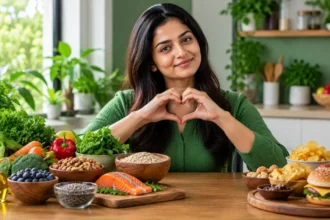
A heart-healthy Indian diet generally means more whole grains and millets, legumes, vegetables, fruits, nuts, and healthy cooking oils, alongside less refined flour, deep-fried snacks, added sugar, excess salt, and saturated fat from ghee and full-fat dairy consumed in large quantities. Research specifically shows South Asians, including Indians, face a disproportionately higher and earlier-onset risk of cardiovascular disease compared with other ethnic groups, even after accounting for standard risk factors, which makes proactive dietary attention especially worthwhile rather than optional.
Why Heart Health Deserves Extra Attention for Indians
The American Heart Association reports that South Asian adults in the United States, a group that includes people of Indian descent, were more likely to have risk factors for atherosclerotic cardiovascular disease by age 45 compared with white, Black, Chinese, or Hispanic adults in the same age group. Notably, the study found South Asian adults showed this earlier, heightened risk despite generally healthier lifestyle behaviors, including higher diet quality and lower alcohol use, than some of the comparison groups, pointing to a genuine, biologically rooted vulnerability that makes dietary prevention particularly valuable.
This heightened risk does not mean heart disease is inevitable, it means dietary choices carry outsized importance for people of Indian descent specifically, making a thoughtfully built heart-healthy diet a genuinely high-value investment rather than a generic wellness suggestion that applies equally to everyone regardless of background.
Foods to Eat More Of
1Whole Grains and Millets
Ragi, jowar, bajra, and whole wheat provide fiber that helps manage cholesterol and blood sugar, both closely tied to cardiovascular risk. Replacing white rice and refined wheat flour with these options several times a week is one of the most impactful, achievable changes available, and one that does not require giving up rice or roti entirely.
2Dal and Legumes
Lentils, chickpeas, and other legumes are rich in plant protein and soluble fiber, both linked to improved cholesterol profiles. Dal is already a daily staple in most Indian households, making this one of the easiest heart-healthy habits to simply continue and expand rather than newly adopt, particularly by varying the type of dal used across the week.
3Vegetables and Leafy Greens
A generous portion of vegetables, particularly leafy greens like spinach and methi, provides fiber, potassium, and antioxidants that support healthy blood pressure and reduce inflammation associated with cardiovascular disease, making them worth prioritizing at every main meal rather than treating as a minor side dish.
4Fruits
Fresh, whole fruit provides fiber and potassium while satisfying a sweet craving without the added sugar found in many processed desserts and sweets common in Indian celebrations and daily snacking alike, making it a genuinely useful substitute for reaching for something sugary between meals.
5Nuts and Seeds
Almonds, walnuts, and flaxseeds provide healthy unsaturated fats and, in the case of walnuts and flaxseeds, plant-based omega-3 fatty acids, associated with improved cardiovascular markers when eaten in moderate, consistent amounts rather than large, irregular portions.
6Fish, for Non-Vegetarian Eaters
Fatty fish like mackerel and sardines, both widely available and traditionally eaten across coastal India, provide omega-3 fatty acids specifically linked to cardiovascular benefits, making them a valuable regular addition for non-vegetarian eaters looking to diversify their protein sources beyond red meat and poultry alone.
Want more practical, research-backed nutrition guides like this one?
Explore More on HealthzeetFoods to Limit
7Refined Flour and White Rice, in Excess
A nationwide study published in Nature Medicine, conducted by the Indian Council of Medical Research and the Madras Diabetes Research Foundation, analyzed the diets of over 18,000 adults across India and found that 62 percent of daily calories came from carbohydrates, largely from refined sources like white rice and milled wheat flour, one of the highest carbohydrate shares recorded globally. Since elevated blood sugar and related metabolic conditions are closely tied to cardiovascular risk, this pattern has real relevance for heart health, not just blood sugar management alone.
8Deep-Fried Snacks
Samosas, pakoras, and other deep-fried snacks are genuinely delicious and deeply embedded in Indian food culture, but frequent, large portions contribute meaningful saturated and trans fat intake, both linked to unfavorable cholesterol changes over time, particularly when the same oil is reused repeatedly for frying.
9Added Sugar and Sweets
Traditional Indian sweets, along with sugary tea and packaged snacks, add up quickly, and excess added sugar intake is linked to higher triglycerides and increased cardiovascular risk over time, independent of total calorie intake, making it worth tracking separately from overall diet quality.
10Excess Salt From Pickles, Papad, and Packaged Snacks
The World Health Organization recommends limiting total fat intake to below 30 percent of daily calories and specifically limiting free sugars to less than 10 percent, noting these patterns help protect against noncommunicable diseases including heart disease and stroke. WHO guidance also emphasizes reducing sodium intake as a key measure for cardiovascular disease prevention, a recommendation particularly relevant given how much sodium accumulates from pickles, papad, and packaged snacks common in Indian meals.
11Excess Ghee, Butter, and Full-Fat Dairy
Ghee and full-fat dairy have a legitimate place in Indian cooking and are not inherently harmful in moderate amounts, but heavy daily use across multiple dishes can meaningfully increase saturated fat intake, worth moderating rather than eliminating entirely, since a complete ban often backfires and leads to overcompensating later.
Choosing a Heart-Healthy Cooking Oil
Mustard oil and til (sesame) oil, both traditional choices in different Indian regions, contain a favorable mix of unsaturated fats, including some omega-3 content in the case of mustard oil. Groundnut and rice bran oil are also reasonable choices with moderate saturated fat content. Rotating between a couple of these oils, rather than relying heavily on one and using excessive quantities regardless of type, is a reasonable, practical approach that also adds some variety of flavor to your cooking across the week.
Practical Swaps for Everyday Meals
Small, specific substitutions tend to be far easier to sustain long term than an entirely new way of eating, and these swaps work well precisely because they do not require abandoning familiar dishes.
- Swap white rice for a millet or brown rice blend a few times weekly.
- Swap deep-fried snacks for roasted chana, steamed dhokla, or grilled options during snack time.
- Swap a second helping of rice or roti for an extra serving of sabzi or dal.
- Swap regular tea with added sugar for less sweetened or unsweetened versions gradually.
- Swap store-bought pickles and papad for fresh salad or raita as a side.
- Swap excessive ghee tempering for a measured spoon rather than pouring freely.
A Sample Day of Heart-Healthy Indian Eating
Seeing how these principles come together in a real day of eating often makes them easier to apply than a list of rules alone.
| Meal | Example |
|---|---|
| Breakfast | Vegetable oats upma or ragi dosa with sambar |
| Mid-morning | A piece of fresh fruit or a small handful of almonds |
| Lunch | Dal, mixed vegetable sabzi, one millet roti or a small bowl of rice, salad, curd |
| Evening | Roasted chana or sprouts chaat instead of fried snacks |
| Dinner | Grilled fish or paneer, sauteed leafy greens, one roti |
Eating Out and Festival Season
Social eating and festivals are a genuine part of Indian life, and a heart-healthy approach should work with these occasions rather than treating them as something to dread or avoid entirely.
- Choose grilled, roasted, or tandoor-cooked options over deep-fried when eating out.
- During festivals, enjoy traditional sweets in modest portions rather than avoiding them entirely, which tends to be more sustainable long term.
- Balance a heavier festive meal with lighter, vegetable-forward meals the rest of the day.
- Ask for reduced oil or ghee when ordering, many restaurants can accommodate this on request.
- Stay mindful of portion size at buffets and family gatherings, where overeating is easy without noticing.
Quick Reference: Eat More vs Eat Less
The table below condenses everything covered above into a simple, scannable reference for everyday meal planning.
| Eat More | Eat Less |
|---|---|
| Millets and whole grains | Refined flour and white rice, in excess |
| Dal and legumes | Deep-fried snacks |
| Vegetables and leafy greens | Added sugar and sweets |
| Fresh fruit | Pickles, papad, packaged snacks |
| Nuts, seeds, fatty fish | Excess ghee, butter, full-fat dairy |
Frequently Asked Questions
A Traditional Diet, Adjusted With Intention
A heart-healthy Indian diet does not require rejecting traditional food, it means leaning further into dal, vegetables, whole grains, and healthy fats already central to Indian cuisine, while being more deliberate about refined flour, deep-fried snacks, added sugar, and excess salt that tend to creep in through daily habit rather than conscious choice. Given that research shows people of Indian descent face a genuinely higher and earlier cardiovascular risk than several other groups, these adjustments carry real, outsized value rather than being a generic wellness suggestion that applies equally to everyone.
Start with one or two practical swaps, more millets, less deep-fried snacking, a measured spoon of ghee instead of a free pour, and build from there gradually. None of this requires perfection, consistent, moderate change applied to a diet already rich in genuinely heart-healthy foods is what actually protects long-term cardiovascular health over the years ahead.
Heart-Healthy Indian Diet: Foods to Eat and Limit
Learn which foods support heart health on an Indian diet and which…

Best Foods for Heart Health: What Does the Science Say?
Discover the best foods for heart health, backed by research on the…
