


Ashwagandha Benefits: Traditional Uses, Research and Safety
Ashwagandha has moved from a staple of Ayurvedic medicine to one of the most searched herbal supplements worldwide, promoted for everything from stress relief to better sleep to athletic performance. This guide separates its long traditional history from what modern clinical research actually supports, and what anyone considering it should know about safety.
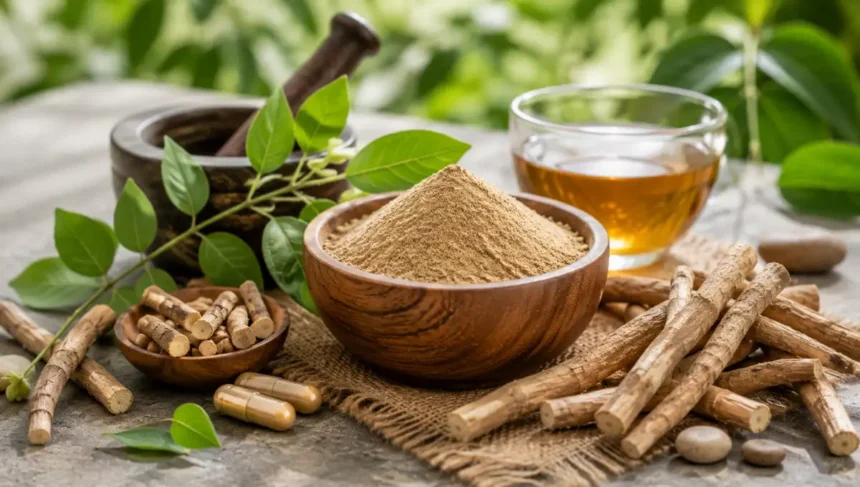
Ashwagandha, botanically known as Withania somnifera, is a small evergreen shrub that has been used in Ayurvedic medicine for centuries, valued as a rasayana, a category of herbs traditionally believed to promote vitality and resilience against stress. Its root is the part most commonly used, both traditionally and in the standardized extracts sold today, and it grows across parts of India, the Middle East, and North Africa.
Unlike many trending herbal supplements, ashwagandha has a genuinely substantial body of modern clinical research behind it, including multiple randomized, placebo-controlled human trials, something that sets it apart from many other herbs that rely mostly on tradition or animal studies. That does not mean every claim attached to it holds up equally well, so it is worth separating what has reasonable evidence from what remains uncertain, and being honest about the gap between the two.
The NIH's Office of Dietary Supplements notes that some ashwagandha preparations may help with insomnia and stress, based on a growing set of clinical trials, though evidence for anxiety specifically remains less clear and evidence for many other promoted uses is still limited. Ashwagandha appears generally well tolerated for short-term use, up to about three months, but its long-term safety has not been established, and rare cases of liver injury have been reported with certain commercial products.
Traditional Ayurvedic Uses
Ashwagandha holds a central place in Ayurvedic tradition, classified as a rasayana, a category of herbs believed to support overall vitality, resilience, and healthy aging when used over time rather than as a quick fix. Its name itself, roughly translating to "smell of the horse" in Sanskrit, is traditionally said to reference both its distinctive root odor and the strength it was believed to confer.
1General Vitality and Stress Resilience
Traditionally, ashwagandha root has been prepared as a powder mixed with warm milk or ghee, used to support energy, strength, and the body's ability to cope with physical and mental stress, a use that closely parallels the modern research interest in its effects on the stress hormone cortisol.
2Sleep and Calm
Ashwagandha's Latin species name, somnifera, translates roughly to "sleep-inducing," reflecting its long traditional use as a mild sedative and sleep aid, a use that modern clinical trials have since specifically investigated.
3Reproductive and Physical Strength
In Ayurvedic practice, ashwagandha has also traditionally been used to support male reproductive health and physical strength, uses that align with more recent clinical research exploring its effects on testosterone and muscle recovery in specific populations.
Active Compounds: Withanolides
Ashwagandha's biological activity is largely attributed to a group of naturally occurring steroidal compounds called withanolides, along with various alkaloids present in the plant. Withanolides are believed to be responsible for many of ashwagandha's proposed effects, though researchers note that other, non-withanolide components may also contribute.
Standardized supplement extracts typically report a specific withanolide percentage on the label, which allows for more consistent dosing between products compared with raw, unstandardized root powder, where withanolide content can vary considerably based on growing conditions and plant part used. This standardization is part of why clinical trials tend to use specific branded extracts rather than generic ashwagandha powder, since consistent dosing is essential for producing reliable, repeatable research results.
What Current Research Actually Shows
The NIH Office of Dietary Supplements states that ashwagandha is rich in bioactive compounds and that some preparations may be helpful for insomnia and stress, based on the current body of clinical trials, while it remains unclear whether ashwagandha meaningfully helps with anxiety specifically. The agency also notes that limited evidence suggests ashwagandha may increase testosterone levels and sperm quality in some studies, but there is not enough high-quality evidence to determine whether it is helpful for many other conditions it is commonly promoted for, including COVID-19.
4Stress and Cortisol
This is the area with the most consistent clinical support. Several randomized, placebo-controlled trials have found meaningful reductions in perceived stress scores and serum cortisol, the body's primary stress hormone, among adults taking standardized ashwagandha root extract over 8 to 12 weeks. More recent trials have replicated this general pattern across different populations, including athletes during high-training periods and adults managing chronic everyday stress, lending additional weight to this specific use.
A prospective, randomized, double-blind, placebo-controlled study published through the National Library of Medicine tested a high-concentration, full-spectrum ashwagandha root extract in adults under chronic stress. Participants taking the extract showed a substantially greater reduction in serum cortisol compared with the placebo group, alongside significant improvements in self-reported stress and anxiety scores, with adverse effects reported as mild and comparable between groups.
5Sleep Quality
Multiple trials have found improvements in sleep quality and sleep onset among people taking ashwagandha, particularly those with elevated stress or mild insomnia, aligning with its traditional reputation as a calming, sleep-supportive herb.
6Athletic Performance and Muscle Recovery
Some research suggests ashwagandha may support modest gains in muscle strength and recovery when combined with resistance training, along with more stable physiological stress markers during intense training periods, though study sizes in this area remain relatively small.
7Testosterone and Male Fertility
A handful of studies suggest ashwagandha supplementation over two to four months may be associated with modest increases in testosterone levels and sperm quality in some men, though the NIH is careful to describe this evidence as limited rather than conclusive.
8Areas Where Evidence Remains Weak
For broader claims like general anxiety disorder treatment, cognitive enhancement, thyroid support, and immune modulation, current evidence is either mixed, based on small studies, or simply insufficient to draw firm conclusions. These remain genuinely interesting areas of ongoing research rather than confirmed benefits.
Want more practical, research-backed herbal wellness guides like this one?
Explore More on HealthZeetSafety, Side Effects and Who Should Avoid It
Ashwagandha is generally considered well tolerated for short-term use, but it is not without real safety considerations worth understanding before starting it. As with most herbal supplements, "natural" does not automatically mean risk-free, and the safety picture depends heavily on dose, duration, product quality, and individual health status.
An NCBI Bookshelf review notes that while ashwagandha has not been strongly implicated in causing liver enzyme elevations during clinical trials, cases of clinically apparent liver injury have been reported in patients taking commercial herbal products labeled as containing ashwagandha, typically appearing two to twelve weeks after starting use. The review notes this type of liver injury remains rare overall, and suggests it should be avoided in people with pre-existing liver disease.
- Common side effects, including loose stools, nausea, and drowsiness, are usually mild and manageable.
- People with pre-existing liver conditions should avoid ashwagandha or use it only under medical supervision.
- Pregnant and breastfeeding women are generally advised not to take ashwagandha, given insufficient safety data.
- People with autoimmune conditions should use caution, since ashwagandha may stimulate immune activity in some cases.
- People with thyroid conditions should be monitored, since some research suggests ashwagandha may increase thyroid hormone levels.
- Ashwagandha may have sedative effects and could interact with sedatives, anti-anxiety medications, and thyroid medications.
- Anyone scheduled for surgery should stop ashwagandha beforehand, given its potential sedative and blood sugar effects.
If you notice symptoms like unusual fatigue, nausea, dark urine, or yellowing of the skin or eyes while taking ashwagandha, stop use and seek medical attention promptly. These symptoms, while uncommon, are worth taking seriously rather than dismissing as a normal adjustment period.
How to Choose and Use an Ashwagandha Supplement
Given the range of products on the market, a few practical details are worth paying attention to before choosing an ashwagandha supplement, since not all products on store shelves are formulated or tested to the same standard.
- Look for standardized extracts that list a specific withanolide percentage, rather than unlabeled raw powder.
- Favor root-only extracts over products that blend root and leaf, since research reviewing safety data suggests root-only formulations carry a more favorable liver and reproductive safety profile.
- Start with the lower end of studied doses, commonly around 300 to 600 milligrams daily, and monitor how you feel.
- Choose products from brands that provide third-party testing or clear sourcing information.
- Discuss ashwagandha with your doctor before starting, particularly if you take thyroid medication, sedatives, or have an existing health condition.
Several supplement brands now formulate specifically around this root-only, standardized approach. ACTIZEET®, for instance, is one such product built around a standardized root extract rather than a whole-plant blend, reflecting the same root-focused sourcing that current safety research favors. As with any ashwagandha product, it is still worth discussing with a doctor before adding it to your routine, particularly if you take other medications.
Quick Reference: Claims vs Current Evidence
| Claimed Benefit | Current Evidence Strength |
|---|---|
| Stress and cortisol reduction | Moderate to strong, multiple RCTs |
| Sleep quality | Moderate, several supportive trials |
| Athletic recovery and strength | Limited to moderate, smaller studies |
| Testosterone and sperm quality | Limited, described by NIH as preliminary |
| Generalized anxiety disorder | Unclear, mixed results |
| Thyroid and immune support | Weak, insufficient human data |
Frequently Asked Questions
A Genuinely Well Researched Herb, With Real Limits
Ashwagandha stands out among trending herbal supplements for having a real, if not complete, body of clinical research behind it, particularly for stress, cortisol, and sleep. At the same time, the NIH is clear that evidence for many other promoted uses remains limited, and safety is not a given, especially with long-term use or in specific populations like pregnant women or people with liver or thyroid conditions. Its long traditional history in Ayurveda is genuinely part of the story, but it is the modern clinical trials, not tradition alone, that give the strongest support for its most reliable use case.
Used thoughtfully, ideally a standardized, root-only extract at a studied dose, and discussed with your doctor if you have any underlying health condition, ashwagandha reflects one of Ayurveda's more evidence-supported traditional herbs. It remains a supplement to use deliberately, not a risk-free cure-all.
Ashwagandha Benefits: Traditional Uses, Research and Safety
Explore ashwagandha's traditional Ayurvedic uses and what current research says about stress,…
