


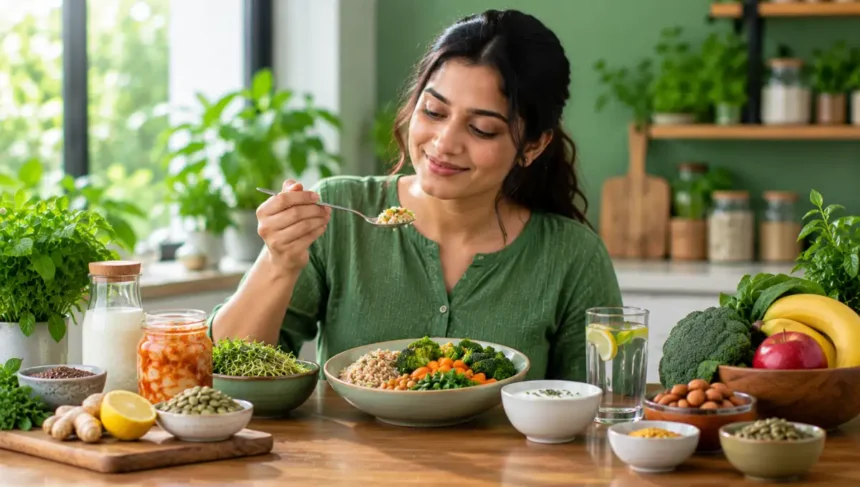
10 Best Foods for Digestion and a Healthy Gut
A healthy gut affects far more than just digestion, it plays a role in immunity, mood, and how well your body absorbs nutrients from everything else you eat. The good news is that many of the best foods for gut health are already sitting in a typical Indian kitchen. Here are 10 worth eating more consistently, along with practical ways to include them.
Digestive health depends on a combination of fiber, fermented foods, hydration, and a diverse, balanced diet, and Indian cuisine, built around dal, curd, vegetables, and whole grains, already has a strong natural foundation for gut health when eaten consistently and without excessive processed food. The challenge for most people is not a lack of good options, it is simply falling into a narrow, repetitive rotation of refined grains and fried snacks that crowd out the genuinely gut-friendly foods already familiar in Indian kitchens.
Below are 10 foods that genuinely support digestion and a healthy gut, most of which are already familiar, affordable, and easy to find in an Indian kitchen or local market, requiring no special shopping trip or unusual ingredient.
A healthy gut generally benefits from three things working together, fermented and probiotic foods that introduce beneficial bacteria, fiber-rich foods that feed those bacteria and support regular digestion, and foods that ease occasional bloating or discomfort. Curd, buttermilk, fiber-rich vegetables, whole grains, and traditional digestive aids like fennel and ginger all fit naturally into an everyday Indian diet without requiring expensive supplements or hard-to-find ingredients, making this one of the more achievable areas of health to actually improve through food alone.
1. Curd (Dahi)
Curd is one of the most naturally probiotic-rich foods in the Indian diet, containing live bacterial cultures that support a healthy balance of gut bacteria. It is also easier to digest than plain milk for many people, since the fermentation process partially breaks down lactose, which is part of why curd remains gentle on the stomach even for those who find other dairy products harder to tolerate.
How to include it: A bowl of fresh curd with lunch or dinner, or as part of a simple raita, is a near-daily way to support gut health without any special preparation.
2. Buttermilk (Chaas)
Buttermilk, made by diluting and churning curd, is traditionally consumed after meals across many Indian households specifically to aid digestion. It is lighter than curd, well hydrating, and, particularly when flavored with roasted cumin and a pinch of black salt, has long been used as a simple remedy for a heavy, bloated feeling after eating, especially during hot weather when a heavier drink feels less appealing.
How to include it: A glass of chaas with roasted jeera powder after lunch is a traditional, practical habit worth reviving if it has fallen out of your daily routine.
3. Ginger
Ginger has a long-standing reputation, and a reasonable amount of supporting research, for easing nausea and general digestive discomfort. It is commonly used in Indian cooking both as a flavor base and as a specific remedy for an upset stomach or sluggish digestion, often reached for at the very first sign of stomach discomfort in many households.
How to include it: Fresh ginger tea, a small piece chewed with a pinch of salt before meals, or grated ginger added to dal and sabzi are all simple, traditional ways to include it regularly throughout the week.
4. Fennel Seeds (Saunf)
Fennel seeds are chewed after meals across India for a reason, they have a mild carminative effect, traditionally believed to ease gas and support digestion, along with freshening breath. Fennel tea is also a common home remedy for mild bloating, and many restaurants still keep a small bowl of saunf by the exit precisely for this reason.
How to include it: A small spoon of saunf after meals, or steeped in hot water as a simple after-dinner tea, is an easy, low-effort habit to build.
Want more practical, research-backed nutrition guides like this one?
Explore More on Healthzeet5. Bananas
Bananas are gentle on the digestive system and contain a type of fiber that can help regulate bowel movements in both directions, easing constipation for some people while also being a traditional food recommended during mild diarrhea due to their binding effect and potassium content, making them a genuinely versatile digestive food.
How to include it: A ripe banana as a snack, or blended into a smoothie, is an easy, widely available addition to almost any daily routine, regardless of season or region.
6. Papaya
Papaya contains papain, a digestive enzyme that helps break down proteins, and is traditionally recommended in Indian households for supporting smoother digestion and easing occasional constipation, thanks partly to its decent fiber content and high water content that adds bulk without heaviness.
How to include it: Fresh papaya as a morning fruit, on its own or in a fruit bowl, is a simple, widely available way to include it regularly, since it is affordable and available across most of the year in India.
7. Millets and Whole Grains
Millets like ragi, jowar, and bajra, along with whole wheat and brown rice, provide considerably more fiber than refined grains like white rice and maida. This fiber adds bulk to stool, supports regular bowel movements, and feeds beneficial gut bacteria, an increasingly important consideration given how carbohydrate-heavy many typical Indian diets have become.
How to include it: Swapping white rice or refined wheat roti for a millet-based version a few times a week is a practical, gradual way to increase fiber intake without a complete diet overhaul or unfamiliar new ingredients.
8. Fermented Foods (Idli, Dosa, Dhokla)
South Indian staples like idli and dosa, and Gujarati dhokla, are made from batters that undergo natural fermentation before cooking. This fermentation process can introduce beneficial bacterial activity and also makes certain nutrients easier for the body to absorb compared with unfermented grain and lentil batters, a genuinely elegant example of traditional food preparation aligning with modern gut health understanding.
How to include it: These dishes are already common breakfast or snack options across India, making this one of the easiest items on this list to include without any real change in habit or grocery shopping routine.
9. Flaxseeds (Alsi)
Flaxseeds are a concentrated source of both soluble and insoluble fiber, along with healthy fats, making them useful for supporting regular bowel movements and adding bulk to the diet in a small, easy-to-include serving that fits into almost any meal without changing its flavor significantly.
How to include it: A spoon of ground flaxseed mixed into curd, added to smoothies, or sprinkled over a meal is a simple, low-effort way to boost fiber intake daily without needing to change your regular cooking.
10. Leafy Greens and Fiber-Rich Vegetables
Spinach, methi, and other leafy greens, along with fiber-rich vegetables like carrots, beans, and gourds common in Indian sabzi, provide both fiber and micronutrients that support regular digestion and a diverse gut microbiome, which research increasingly links to broader digestive and immune health beyond digestion alone.
How to include it: Including at least one leafy green or fiber-rich vegetable sabzi in your daily meals, rather than relying mainly on potato or refined starches, makes a meaningful difference over time, even if the change feels small on any single day.
Simple Daily Habits That Help Digestion
Food alone is not the whole picture, a handful of everyday habits work alongside these foods to meaningfully support digestion.
- Drink enough water throughout the day, since fiber needs adequate fluid to work effectively and prevent it from having the opposite of its intended effect.
- Eat meals at roughly consistent times, which helps train digestive rhythm and reduces unpredictable hunger or discomfort later in the day.
- Chew food thoroughly and eat without rushing, since digestion genuinely begins in the mouth, not just in the stomach.
- Include a short walk after meals, a traditional habit that supports digestion and blood sugar regulation, and is easy to build into most daily schedules.
- Limit excessive fried, processed, and very heavily spiced food, particularly if you already experience bloating or discomfort regularly.
- Manage stress where possible, since the gut and nervous system are closely connected, and chronic stress can worsen digestive symptoms considerably.
Quick Reference: Foods and Their Main Benefit
The table below summarizes each food from this list alongside its primary benefit and an easy way to fit it into your routine.
| Food | Main Benefit | Easy Way to Include |
|---|---|---|
| Curd | Probiotics, gut bacteria balance | With lunch or dinner daily |
| Buttermilk | Post-meal digestion, hydration | Glass after lunch |
| Ginger | Nausea, sluggish digestion | Tea or added to cooking |
| Fennel seeds | Gas, bloating relief | After meals or as tea |
| Banana | Regulates bowel movements | Daily snack |
| Papaya | Digestive enzymes, fiber | Morning fruit bowl |
| Millets | High fiber, feeds gut bacteria | Swap for refined grains |
| Idli/dosa/dhokla | Fermentation benefits | Breakfast or snack |
| Flaxseeds | Fiber, regularity | Ground, added to meals |
| Leafy greens | Fiber, microbiome diversity | Daily sabzi |
Frequently Asked Questions
Gut Health Built From Everyday Indian Staples
A healthy gut does not require exotic superfoods or expensive supplements, many of the most genuinely useful foods for digestion, curd, buttermilk, ginger, fennel, millets, and fiber-rich vegetables, are already staples of a traditional Indian diet. The real opportunity lies in eating them consistently and in reasonable variety, rather than relying heavily on refined grains and processed food most of the week, a pattern that has become increasingly common alongside busier modern schedules.
Start by including one or two of these foods more deliberately, a daily bowl of curd, buttermilk after lunch, or swapping white rice for a millet a few times a week, and let the rest follow gradually. Combined with basic habits like adequate hydration, mindful eating, and regular movement, these familiar foods form a genuinely solid foundation for digestive and overall gut health that does not require reinventing how you already eat.
10 Best Foods for Digestion and a Healthy Gut
Discover 10 best foods for digestion and a healthy gut, from curd…

How to Improve Digestion Naturally: 15 Science-Backed Tips
Learn how to improve digestion naturally with 15 science-backed tips for better…
