


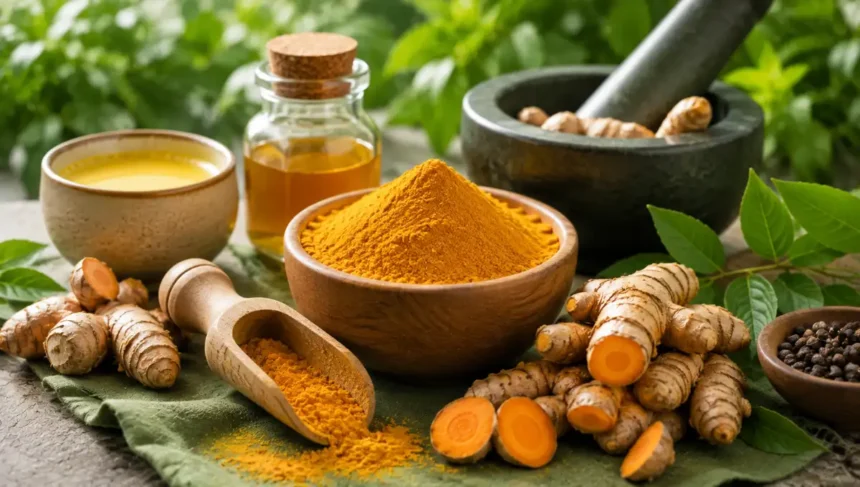
Turmeric Benefits: Traditional Uses and What Science Says
Few spices carry as much reputation as turmeric, used in Indian kitchens and traditional medicine for thousands of years and now sold worldwide as a supplement promising everything from pain relief to disease prevention. This guide separates turmeric's long traditional history from what current clinical research actually supports, and what remains genuinely uncertain.
Turmeric, the bright yellow spice derived from the root of Curcuma longa, has been used in South Asian cooking and Ayurvedic medicine for thousands of years, valued for its color, flavor, and traditional role in supporting digestion and easing inflammation. Its active compound, curcumin, has since become one of the most researched natural compounds in modern nutrition science.
That volume of research is a double-edged sword. It means there is genuinely more evidence on turmeric than on most spices, but it also means claims about turmeric have outpaced what the science actually confirms in several areas. Here is an honest breakdown of both sides, drawing on how the compound has been used traditionally and what controlled research has and has not been able to confirm so far.
Turmeric's main active compound, curcumin, has documented anti-inflammatory and antioxidant properties in laboratory research, and some human clinical trials show modest benefit for conditions like knee osteoarthritis and certain markers of heart disease risk. At the same time, the NIH's National Center for Complementary and Integrative Health is clear that there is not yet enough high-quality evidence to confirm turmeric or curcumin as an effective treatment for most of the conditions it is marketed for, and high-dose supplement formulations carry a documented, if uncommon, liver injury risk.
Traditional Uses of Turmeric
Turmeric has held a central place in Indian households and Ayurvedic medicine for millennia, used both as a everyday cooking spice and as a traditional remedy applied well beyond the kitchen.
1Culinary Use
Turmeric is a foundational spice in curries, dals, and rice dishes across South Asian cuisine, prized for its golden color, mild earthy flavor, and role as a natural food preservative in some traditional preparations.
2Ayurvedic and Traditional Medicine
In Ayurvedic tradition, turmeric has long been used to support digestion, ease joint discomfort, and address skin concerns, often prepared as a paste applied topically or mixed into warm milk, commonly known as haldi doodh or golden milk, and taken for colds and general wellness.
3Ceremonial and Cultural Use
Beyond medicine and food, turmeric holds ceremonial significance in many South Asian traditions, used in religious rituals, wedding ceremonies, and as a natural dye, reflecting its deep cultural roots that predate modern scientific interest in the spice.
Curcumin: The Active Compound Behind the Claims
Curcumin is the primary curcuminoid responsible for turmeric's color and most of its studied biological activity, though it makes up only a small percentage of turmeric by weight, typically around 2 to 5 percent. This is an important detail, since it means the amount of curcumin in a typical serving of turmeric used in cooking is relatively modest compared with concentrated supplement doses used in many clinical trials.
Laboratory research has linked curcumin to antioxidant activity and the ability to influence inflammatory pathways in cells, which forms the biological basis for many of the health claims associated with turmeric. The gap between promising laboratory findings and confirmed benefit in real human trials, however, is where much of the current scientific uncertainty lies.
It is worth remembering that a compound working in a petri dish or an animal model does not automatically mean it works the same way once ingested by a person, absorbed through the digestive system, and processed by the liver. This gap between promising early-stage research and confirmed clinical benefit is common across nutrition science generally, and turmeric is a particularly well-documented example of it.
What Science Actually Says About Turmeric
The NIH's National Center for Complementary and Integrative Health states plainly that researchers do not currently know enough to definitively conclude whether turmeric or curcumin is beneficial for any specific health purpose, despite it being among the more extensively studied natural compounds. The center notes that several meta-analyses have evaluated turmeric or curcumin for knee osteoarthritis symptoms, with initial evidence appearing positive for pain and stiffness, though higher-quality research is still needed to reach a definitive conclusion.
4Joint Health and Osteoarthritis
This is one of the areas with the most encouraging, though still not conclusive, evidence. Several clinical trials and meta-analyses have found modest improvements in knee pain and stiffness among people taking curcumin supplements, making it one of the more plausible practical uses currently supported by research.
5Heart Disease Risk Factors
Some research has explored curcumin's effect on cholesterol and blood pressure. A review of available studies found curcumin generally safe and potentially helpful in modestly lowering certain cholesterol markers when used alongside standard treatment, though researchers note more work is needed to clarify optimal dosing and which patients benefit most.
6Digestive Health
A review published through the National Library of Medicine examining curcumin's effects on the upper gastrointestinal tract describes evidence from laboratory and animal studies suggesting curcumin may help protect against reflux-related esophageal irritation and stomach lining damage from certain medications, and notes early research exploring its role alongside standard treatment for H. pylori infection. The authors are clear that while findings are encouraging, they call for further clinical studies with refined formulations before curcumin can be considered a standard part of digestive treatment.
7Non-Alcoholic Fatty Liver Disease
Some early research has looked at curcumin's effect on markers related to non-alcoholic fatty liver disease, with a few studies suggesting possible improvement in certain measures. Which specific measures respond consistently remains unclear, and this area needs considerably more research before firm conclusions can be drawn.
8Areas Where Evidence Remains Weak
For many of the broader claims associated with turmeric, cancer prevention, cognitive protection, and mood support among them, the current evidence relies heavily on laboratory or animal studies rather than robust human clinical trials. These are genuinely interesting areas of ongoing research, but not yet confirmed benefits people should rely on for treatment decisions.
Want more practical, research-backed nutrition guides like this one?
Explore More on HealthZeetWhy Bioavailability Matters
One of the most consistent findings across turmeric research is that curcumin, on its own, is poorly absorbed by the body. It is broken down and cleared quickly, meaning only a small fraction of what is consumed actually reaches the bloodstream in an active form.
9The Black Pepper Connection
Piperine, the compound responsible for black pepper's sharpness, has been shown to significantly slow how quickly the body clears curcumin, dramatically increasing the amount that reaches circulation. This is part of why traditional Indian cooking so often pairs turmeric with black pepper, a combination modern research has since validated for a genuinely practical reason.
10Fat-Based Absorption
Curcumin is fat-soluble, meaning it absorbs better when consumed alongside a source of dietary fat, such as ghee, coconut oil, or nuts. This is another detail traditional preparations like golden milk, which combines turmeric with milk fat, appear to have gotten right well before the underlying mechanism was understood.
Safety, Side Effects and Who Should Be Cautious
Turmeric used as a culinary spice in typical food amounts is widely considered safe for most people. Concentrated supplement forms, however, carry some risks worth understanding before use.
- Highly bioavailable curcumin formulations, particularly those combined with piperine or other absorption enhancers, have been linked to rare but documented cases of liver injury.
- People taking blood thinners should be cautious, since curcumin may have mild blood-thinning effects that could interact with medication.
- People with gallbladder disease or bile duct obstruction should consult a doctor before taking concentrated turmeric supplements.
- Pregnant and breastfeeding women should discuss any turmeric supplement, as opposed to normal culinary use, with a healthcare provider first.
- Warning signs of liver-related issues include unusual fatigue, nausea, dark urine, or yellowing of the skin or eyes, which warrant stopping use and seeking medical attention.
Conventional oral turmeric or curcumin, at typical doses, is generally considered likely safe for use up to two to three months, according to current guidance, though longer-term safety data for high-dose supplementation remains more limited. As with any supplement, telling your doctor what you are taking, including turmeric, matters just as much as it does for prescription medication, particularly if you are already managing a chronic condition.
How to Use Turmeric in Practice
Given the current state of evidence, using turmeric primarily as a culinary spice, rather than relying on high-dose supplements for specific medical claims, remains the most defensible everyday approach for most people. This does not mean supplements have no place, only that they should be considered deliberately rather than as an automatic upgrade over food-based use.
- Add turmeric to curries, dals, soups, and roasted vegetables as part of regular cooking.
- Pair it with a pinch of black pepper and a source of fat to support better absorption.
- Try warm turmeric milk occasionally as a traditional comfort drink rather than a medical treatment.
- If considering a concentrated curcumin supplement for a specific condition, discuss dosage and formulation with a doctor first.
- Watch for any unusual symptoms if using higher-dose supplements, and stop use if signs of liver concern appear.
Quick Reference: Claims vs Current Evidence
| Claimed Benefit | Current Evidence Strength |
|---|---|
| Knee osteoarthritis pain and stiffness | Moderate, initial evidence positive |
| Cholesterol and heart disease risk markers | Limited to moderate, more research needed |
| Digestive and gastric protection | Early stage, mostly lab and animal studies |
| Non-alcoholic fatty liver disease | Early stage, mixed results |
| Cancer prevention or treatment | Weak in humans, mostly lab-based |
| Mood and cognitive function | Weak, limited human trial data |
Frequently Asked Questions
A Genuinely Useful Spice, Without the Overstated Claims
Turmeric's traditional reputation is not baseless, curcumin does have documented anti-inflammatory and antioxidant properties, and some conditions, particularly knee osteoarthritis, show modest, genuine research support. At the same time, the NIH's own assessment is honest that most of the more dramatic claims made about turmeric outpace what current clinical evidence actually confirms.
Used the way it has been used for thousands of years, as a everyday cooking spice paired with black pepper and a source of fat, turmeric remains a reasonable, low-risk addition to a balanced diet. For specific health conditions or higher-dose supplementation, a conversation with your doctor is the more responsible next step than chasing marketing claims alone.

Ginger Benefits: Nutrition, Uses and Scientific Evidence
Explore ginger benefits for nausea, digestion, period pain, joints and blood sugar,…
Turmeric Benefits: Traditional Uses and What Science Says
Explore turmeric's traditional uses and what current research actually shows about curcumin,…
