


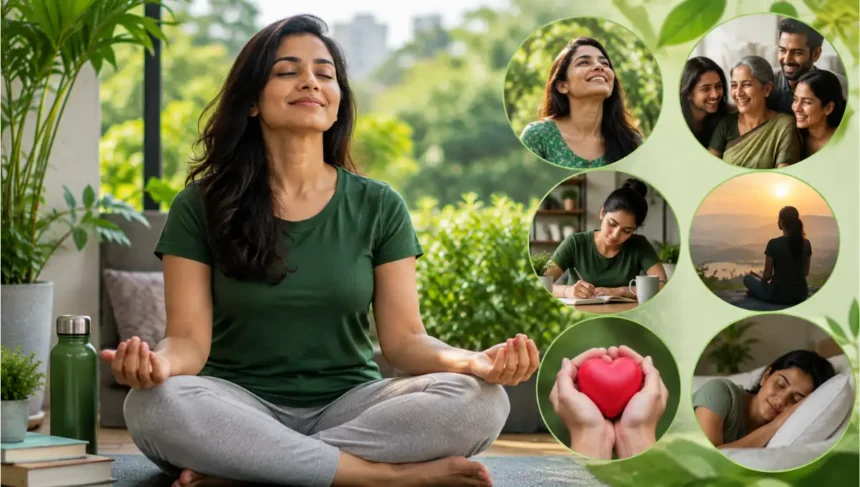
What Is Emotional Wellbeing and Why Does It Matter?
Emotional wellbeing is easy to associate with simply feeling happy, but it is a far more useful, practical skill than that. It is the ability to notice, understand, and manage your emotions in a way that helps you handle life's stresses and keep functioning well, even when things get hard. Here is what it actually involves, why it affects far more than your mood, and how to strengthen it.
Emotional wellbeing is often reduced to a vague idea of "feeling good," but the more accurate, useful definition centers on capacity, your ability to handle stress, adapt to change, and keep functioning even during difficult periods, rather than the absence of hard emotions altogether. Someone can be emotionally well and still feel grief, frustration, or disappointment, what matters is how they process and move through those feelings rather than whether they experience them at all.
This distinction matters because it reframes emotional wellbeing as something you can actively build, not a fixed personality trait or a matter of luck. Below is a closer look at what it actually means, why researchers increasingly link it to physical health outcomes, and practical, evidence-based ways to strengthen it, drawn directly from resources developed by the NIH and CDC.
The NIH defines emotional wellness as the ability to successfully handle life's stresses and adapt to change and difficult times, noting that how you feel can affect your everyday activities, relationships, and overall mental health. The CDC similarly describes wellbeing as including positive emotions, the relative absence of negative emotions, life satisfaction, fulfillment, and positive functioning, a definition broad enough to include both how you feel and how well you are able to function day to day.
What Emotional Wellbeing Actually Means
The National Institutes of Health defines emotional wellness as the ability to successfully handle life's stresses and adapt to change and difficult times, noting that how a person feels can affect their ability to carry out everyday activities, their relationships, and their overall mental health, and that how someone reacts to their experiences and feelings can change over time.
This framing is important because it treats emotional wellbeing as dynamic, not fixed. It is not about eliminating negative emotions or maintaining constant positivity, it is about having the capacity to experience the full range of human emotion without becoming overwhelmed or stuck, and to recover and adapt after difficult experiences, whether that means a stressful week at work or a genuinely painful life event.
Emotional Wellbeing vs Mental Health vs Happiness
These three terms overlap significantly but are not truly identical, and understanding the distinctions helps clarify what emotional wellbeing specifically refers to.
1Emotional Wellbeing vs Mental Health
Mental health is the broader category, encompassing psychological, emotional, and social functioning, including the presence or absence of diagnosable mental health conditions. Emotional wellbeing is a component within that broader picture, specifically focused on how well someone manages and processes their emotional experiences day to day, whereas mental health also covers cognitive function, diagnosed conditions, and treatment.
2Emotional Wellbeing vs Happiness
Happiness typically refers to a positive emotional state in the moment, while emotional wellbeing is closer to a durable capacity or skill set. Someone can have strong emotional wellbeing and still feel unhappy during a genuinely difficult period, what distinguishes them is the ability to process that unhappiness constructively rather than being consumed or destabilized by it long term, and to eventually return to a stable baseline.
Why Emotional Wellbeing Matters More Than You Might Think
Emotional wellbeing is not simply a "soft" quality-of-life concern, it is measurably connected to physical health outcomes, relationships, and even how long people live, a body of evidence that has grown substantially over the past two decades.
Harvard Health Publishing reports that a 2022 review in The American Journal of Medicine, pooling findings from nearly 182,000 people across six separate studies, found optimism linked to a lower risk of cardiovascular disease. Researchers note that people who are happier or more optimistic may be more likely to exercise, eat well, and sleep better, behaviors that likely help explain the connection, alongside more direct physiological pathways currently under study.
The CDC similarly frames wellbeing as a valid public health outcome in its own right, not merely a byproduct of physical health, noting that it is associated with self-perceived health, longevity, healthier behaviors, and stronger social connectedness. This positions emotional wellbeing as something worth actively investing in, not a luxury to address only after physical health concerns are handled, but a genuine, parallel pillar of overall health.
The Core Components of Emotional Wellbeing
The CDC's Well-Being Concepts framework describes wellbeing as generally including positive emotions such as contentment and happiness, the relative absence of negative emotions like persistent depression or anxiety, satisfaction with life, a sense of fulfillment, and positive functioning, noting there is no single universally agreed definition, but broad consensus around these core elements.
3Positive Emotional Experience
This includes the presence of genuine positive emotions like contentment, joy, and gratitude, not as a constant state, but as a meaningful, recurring part of daily experience that balances out the harder moments life inevitably includes.
4Effective Management of Negative Emotions
Rather than eliminating negative emotions entirely, emotional wellbeing involves experiencing them without becoming overwhelmed or stuck, and having tools to process feelings like sadness, frustration, or worry constructively, so they move through rather than accumulate over time.
5Life Satisfaction and Fulfillment
A broader sense that life is going reasonably well, and that daily activities carry some meaning or purpose, contributes significantly to overall emotional wellbeing beyond moment-to-moment mood, functioning almost like a stable foundation beneath the day-to-day emotional fluctuations everyone experiences.
6Positive Functioning
This includes the practical ability to maintain relationships, manage responsibilities, and adapt to change, essentially whether someone's emotional state supports or undermines their ability to function in daily life, which is ultimately what separates a difficult but manageable period from one that requires additional support.
Want more practical, research-backed wellness guides like this one?
Explore More on HealthZeetSigns of Strong and Struggling Emotional Wellbeing
Recognizing where you currently and honestly stand is a useful starting point before working to strengthen emotional wellbeing, since the right next step often depends on which specific area feels weakest.
- Strong emotional wellbeing often looks like recovering relatively well after setbacks, maintaining supportive relationships, and generally feeling capable of handling day-to-day stress.
- Struggling emotional wellbeing may show up as persistent overwhelm, difficulty bouncing back from minor setbacks, withdrawing from relationships, or feeling emotionally "stuck" for extended periods.
- Both states exist on a spectrum and can shift with circumstances, sleep, stress levels, and life events, rather than being fixed, permanent traits.
How to Build Emotional Wellbeing: NIH's Six Strategies
The NIH's Emotional Wellness Toolkit outlines six evidence-informed strategies for strengthening emotional wellbeing, each addressing a different, practical dimension of daily life rather than offering a single one-size-fits-all fix.
7Build Resilience
Developing healthy physical habits, practicing gratitude, and engaging with your community all contribute to resilience, the capacity to adapt well and recover after difficult experiences, rather than being permanently derailed by them.
8Reduce Stress
Prioritizing sleep, exercising regularly, and building a supportive social network all help manage the physiological and psychological load of ongoing stress, addressing the root causes rather than only the symptoms of feeling overwhelmed.
9Get Quality Sleep
Maintaining a consistent sleep schedule and a restful sleep environment supports emotional regulation, since poor sleep consistently worsens mood and stress reactivity, making even minor daily frustrations feel considerably harder to manage.
10Be Mindful
Practicing mindfulness techniques, including deep breathing and mindful eating, helps build the capacity to notice emotional states without becoming immediately overwhelmed by them, creating a small but genuinely useful pause between feeling and reacting.
11Cope With Loss
Seeking support from friends, considering grief support groups, and allowing adequate time to mourn are specifically highlighted as important for processing loss in a healthy way, rather than suppressing grief or rushing back to normal before you are genuinely ready.
12Strengthen Social Connections
Building strong relationships, participating in community activities, and volunteering all support emotional wellbeing, reflecting how strongly social connection is tied to psychological resilience, and how isolation tends to work in the opposite direction.
When to Seek Additional Support
Self-directed strategies genuinely help most people most of the time, but certain patterns are worth taking as a signal to reach out for more structured support.
- Persistent sadness, anxiety, or emotional numbness lasting more than a few weeks.
- Difficulty functioning at work, school, or in relationships due to emotional distress.
- Withdrawing significantly from activities or people you used to enjoy.
- Using alcohol, substances, or other unhealthy coping mechanisms to manage emotions.
- Thoughts of self-harm or feeling like things will never improve.
Building emotional wellbeing through everyday habits is genuinely valuable, but it does not replace professional support when emotional struggles become significant or persistent. A therapist or counselor can provide tools, structure, and support that go beyond what self-directed strategies alone can realistically offer.
Quick Reference: Strategies for Emotional Wellness
| Strategy | Practical Action |
|---|---|
| Build resilience | Practice gratitude, engage with community |
| Reduce stress | Exercise regularly, build social support |
| Get quality sleep | Consistent schedule, restful environment |
| Be mindful | Deep breathing, mindful eating |
| Cope with loss | Seek support, allow time to grieve |
| Strengthen connections | Build relationships, volunteer |
Frequently Asked Questions
A Skill Worth Building, Not Just a Feeling to Chase
Emotional wellbeing is less about constant happiness and more about genuine capacity, the ability to handle stress, adapt to change, and process difficult emotions without becoming overwhelmed by them. Research increasingly shows this capacity connects to far more than mood alone, touching physical health outcomes, relationship quality, and how well people function through life's inevitable hard periods, from minor daily stress to genuine loss.
The NIH's six strategies, building resilience, reducing stress, prioritizing sleep, practicing mindfulness, coping with loss, and strengthening social connections, offer a genuinely practical starting point. None of these require dramatic life changes, only consistent, small investments in a capacity that pays off across nearly every part of life, from how you feel day to day to your long-term physical health.

What Is Emotional Wellbeing and Why Does It Matter?
Discover what emotional wellbeing actually means, why it affects your physical health…
