



Indian Home Remedies: Tradition, Evidence and What You Should Know
Almost every Indian household has a go-to remedy for a cold, an upset stomach, or a scratchy throat, usually something involving the kitchen rather than the medicine cabinet. Some of these desi nuskhe hold up well under modern research, others are less clear cut. Here is an honest look at common Indian home remedies, what evidence actually supports, and when it is time to see a doctor instead.
Home remedies are woven into daily life across Indian households in a way that rarely gets a second thought. Haldi doodh before bed, ajwain water after a heavy meal, a ginger-tulsi kadha at the first sign of a cold, these habits are passed down through generations, often before anyone thinks to ask whether research backs them up. They are usually the first response to a minor complaint, tried well before anyone considers a pharmacy or a doctor's visit.
That question is worth asking, not to dismiss tradition, but to use these remedies more wisely. Some have genuine, replicated clinical evidence behind them. Others remain largely unproven, even after long traditional use. Knowing the difference helps you use home remedies as a sensible first response, rather than a substitute for medical care when something more serious is going on, and it also helps you avoid unnecessary worry about remedies that are simply low-risk comfort measures rather than proven treatments.
Some of India's most common home remedies, particularly honey for cough and ginger for nausea, have real support from clinical research, including Cochrane systematic reviews. Others, like many uses of turmeric and most digestive remedies, are supported mainly by traditional use and preliminary research rather than strong clinical trials. None of these remedies are a substitute for medical care when symptoms are severe, persistent, or affect infants and young children, where some traditional remedies carry specific safety risks.
Why Home Remedies Persist in Indian Households
Home remedies remain deeply embedded in Indian daily life for reasons that go beyond simple habit. They are inexpensive, use ingredients already in most kitchens, and reflect generations of accumulated observation about what tends to help with common, minor complaints. There is also a strong intergenerational element, remedies are often taught by a parent or grandparent, carrying emotional and cultural weight that goes beyond their measurable physical effect.
This pattern is not unique to India. Traditional and home-based remedies remain widely used across most of the world, even alongside modern healthcare access, though research investment into these practices has historically lagged far behind how commonly they are used, leaving many remedies underexamined rather than disproven. This gap between widespread use and available research funding is worth keeping in mind, since a lack of strong evidence does not automatically mean a remedy is ineffective, it often simply means it has not been studied thoroughly yet.
Remedies for Cold, Cough and Sore Throat
This category includes some of the better-studied home remedies, likely because cold and cough symptoms are common enough worldwide to attract meaningful research funding.
1Honey for Cough
Honey, often mixed into warm water, tea, or taken with ginger, is one of the most common remedies for cough across Indian households, and it happens to be one with genuinely strong supporting evidence.
A Cochrane systematic review found moderate-certainty evidence that honey probably reduces cough frequency better than no treatment or placebo in children, and that honey given for up to three days is probably more effective at relieving cough symptoms than placebo. The review found honey performed similarly to dextromethorphan, a common over-the-counter cough suppressant, though the reviewers noted honey should never be given to infants younger than 12 months, due to the risk of infant botulism.
2Ginger-Tulsi Kadha
A warm decoction of ginger, tulsi, black pepper, and sometimes cinnamon or cloves is a near-universal Indian remedy for cold and cough symptoms. While the full combination has not been studied as a single formula in large clinical trials, its individual ingredients, particularly ginger, have reasonable evidence for easing nausea and general discomfort, lending some support to the traditional combination even without a formula-specific trial.
3Haldi Doodh (Turmeric Milk)
Turmeric milk, taken warm before bed, is a traditional remedy for colds, sore throat, and general immunity. Turmeric's active compound, curcumin, has documented anti-inflammatory properties in laboratory research, and some clinical trials show modest benefit for specific conditions like joint pain, but robust evidence specifically for cold or immune support remains limited, making this more a comforting, low-risk ritual than a proven cold treatment.
4Salt Water Gargle
Gargling warm salt water for a sore throat is a simple, widely used remedy with a reasonable physiological basis, salt water can help reduce throat swelling and may temporarily loosen mucus, offering symptomatic relief even though it does not treat the underlying cause of a sore throat.
Want more practical, research-backed wellness guides like this one?
Explore More on HealthZeetRemedies for Digestion and Stomach Upset
Digestive remedies are another cornerstone of Indian home treatment, often used routinely after meals rather than only when symptoms appear.
5Ginger for Nausea
Ginger, whether chewed raw, steeped as tea, or added to food, is one of the most consistently supported home remedies for nausea across multiple research areas.
A systematic review and meta-analysis of twelve randomized controlled trials involving over 1,270 pregnant women found that ginger significantly improved nausea symptoms compared with placebo, without posing a significant risk for side effects like heartburn or drowsiness. Similar supportive evidence has also been found for ginger in easing nausea related to chemotherapy and post-surgical recovery, making it one of the more broadly validated traditional remedies across different contexts.
6Ajwain (Carom Seed) Water
Ajwain water, made by boiling carom seeds, is a traditional remedy for bloating, gas, and general digestive discomfort. It contains thymol, a compound with some laboratory-documented digestive and antimicrobial properties, though large-scale human clinical trials specifically testing ajwain water for digestive symptoms remain limited, placing it more firmly in the traditionally supported category.
7Saunf (Fennel Seeds)
Chewing fennel seeds after a meal is an extremely common practice across India, traditionally used to freshen breath and ease digestion. Some smaller studies suggest fennel may have mild antispasmodic effects on the digestive tract, though, as with many traditional digestive aids, the evidence base remains smaller than for more extensively studied remedies like ginger.
8Curd and Rice for Upset Stomach
Plain curd with rice is a traditional go-to meal during stomach upset or mild diarrhea, and this one has a reasonably solid nutritional logic behind it. Curd contains live bacterial cultures that may support gut bacteria balance, while plain rice is easy to digest and gentle on an already irritated digestive system, making this combination a sensible, low-risk choice during recovery.
Remedies for Skin and General Wellness
Beyond cold and digestion, several remedies are used for skin concerns and general wellbeing, with a wider range of evidence quality.
9Besan and Turmeric Face Packs
A paste of gram flour, turmeric, and milk or yogurt is a traditional skincare remedy used for brightening and mild exfoliation. This largely reflects a gentle, traditional skincare practice rather than a clinically studied treatment, and it is generally low risk for most skin types, aside from turmeric's tendency to temporarily stain skin.
10Mustard Oil Massage
Warm mustard oil massage, common for infants and adults alike, is traditionally used to support circulation and skin health. Some research has raised questions about mustard oil's effect on infant skin barrier function specifically, making this a remedy worth discussing with a pediatrician for babies, even though its general use in adults is widely considered low risk.
Safety Considerations With Home Remedies
Even remedies made from familiar kitchen ingredients are not automatically risk-free, particularly in specific circumstances or when used in unusually large or concentrated amounts.
- Honey should never be given to infants under 12 months, due to a genuine risk of infant botulism.
- Herbal remedies, including turmeric and ginger in concentrated amounts, can interact with blood thinners and other medications.
- Home remedies used repeatedly instead of seeking care for worsening or persistent symptoms can delay necessary treatment.
- Pregnant women should check with a doctor before relying heavily on any herbal remedy, including seemingly mild ones.
- Remedies applied to broken or irritated skin, including turmeric paste, can occasionally cause irritation or allergic reactions.
When Home Remedies Are Not Enough
Home remedies are generally reasonable for mild, self-limiting symptoms, but certain signs call for medical attention rather than another round of kadha.
- Fever lasting more than a few days, or a fever that is unusually high.
- Difficulty breathing, chest pain, or persistent vomiting.
- Symptoms that worsen despite several days of home treatment.
- Signs of dehydration, including reduced urination, dizziness, or extreme thirst.
- Any symptom in an infant, young child, elderly person, or someone with a chronic health condition that seems more than mild.
Quick Reference: Common Remedies vs Evidence
| Remedy | Traditional Use | Evidence Strength |
|---|---|---|
| Honey | Cough relief | Moderate to strong (Cochrane-reviewed) |
| Ginger | Nausea, digestion | Moderate to strong across contexts |
| Haldi doodh | Cold, immunity | Limited for this specific use |
| Salt water gargle | Sore throat | Reasonable, symptomatic relief |
| Ajwain water | Gas, bloating | Limited, mostly traditional |
| Curd and rice | Stomach upset | Reasonable nutritional logic |
Frequently Asked Questions
Honoring Tradition While Reading the Evidence Honestly
Indian home remedies reflect generations of accumulated household knowledge, and several of the most common ones, honey for cough, ginger for nausea, salt water for a sore throat, hold up well under modern clinical scrutiny. Others remain more a matter of comforting tradition than confirmed science, which does not make them worthless, but does mean they should not replace medical care for anything beyond mild, everyday symptoms. Holding both truths at once, real respect for tradition and a clear eye on the evidence, tends to serve families better than picking one extreme or the other.
Used thoughtfully, with awareness of specific safety considerations like the honey and infant rule, home remedies can remain a reasonable first response to minor complaints. Knowing when to set the kadha aside and call a doctor instead is just as much a part of using these remedies wisely as knowing how to prepare them.
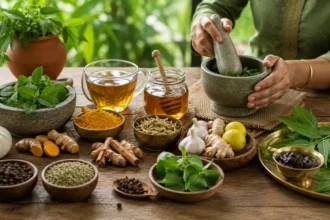
Indian Home Remedies: Tradition, Evidence and What You Should Know
Explore common Indian home remedies like haldi doodh, ginger, and honey, what…
