


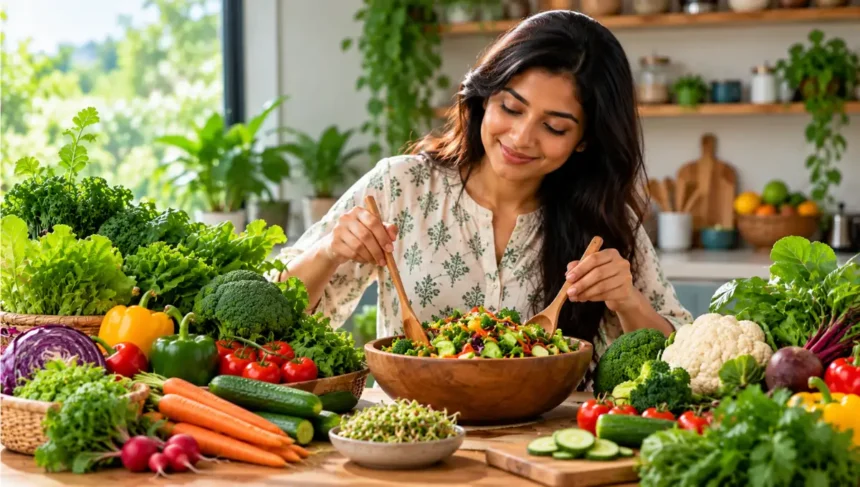
20 Nutrient-Dense Vegetables to Add to Your Diet
Some vegetables pack far more vitamins, minerals, and fibre into every bite than others. This guide covers 20 of the most nutrient-dense vegetables, many of them already sitting in your local sabzi mandi, along with what each one offers and simple ways to eat more of them.
Most of us know we should eat more vegetables. What fewer people realise is that vegetables are not all equal. A bowl of palak or moringa leaves delivers a very different nutritional payload from the same amount of potato or cucumber. Both have a place on your plate, but if you want the most nutrition for the fewest calories, some vegetables clearly stand out.
That is what "nutrient-dense" means: foods that provide a high amount of vitamins, minerals, fibre, and protective plant compounds relative to their calories. Below, we explain how nutrient density is measured, then walk through 20 vegetables worth adding to your weekly menu, with plenty of Indian favourites and practical cooking tips.
The most nutrient-dense vegetables are dark leafy greens such as spinach (palak), moringa leaves, methi, amaranth, mustard greens, and kale; cruciferous vegetables such as broccoli, cauliflower, and cabbage; and orange and red vegetables such as carrots, sweet potato, pumpkin, tomatoes, and bell peppers. They are rich in fibre, vitamins A, C, and K, folate, potassium, and antioxidants. The easiest rule: eat a variety of colours every day, with at least one leafy green.
What Does "Nutrient-Dense" Mean?
Nutrient density compares how many nutrients a food provides with how many calories it contains. A food that gives you a lot of vitamins, minerals, protein, and fibre for very few calories scores high. A food that is mostly calories with little else, such as a sugary biscuit, scores low.
Researchers have tried to put numbers on this. One well-known study, published by the US Centers for Disease Control and Prevention, ranked fruits and vegetables by their nutrient density.
A 2014 study published in the CDC journal Preventing Chronic Disease scored 47 fruits and vegetables based on 17 nutrients, including potassium, fibre, protein, calcium, iron, folate, zinc, and vitamins A, B6, B12, C, D, E, and K, per 100 calories. Watercress came out on top, followed by Chinese cabbage, chard, beet greens, and spinach. Dark leafy greens and cruciferous vegetables dominated the top of the list, and 41 of the 47 foods qualified as "powerhouse" fruits and vegetables.
The study did not include many Indian vegetables like moringa, methi, or amaranth, but these leafy greens share the same nutrient-rich profile and are widely recognised as some of the most nourishing foods in Indian diets.
Why Eating More Vegetables Matters
Vegetables do much more than fill your plate. Their fibre supports digestion and keeps you full. Potassium helps control blood pressure. Antioxidants and plant compounds such as carotenoids, flavonoids, and glucosinolates help protect your cells from damage.
The Harvard T.H. Chan School of Public Health reports that, in large studies, each extra daily serving of fruits and vegetables was linked to about a 4 percent lower risk of dying from cardiovascular disease. People who ate eight or more servings a day were about 30 percent less likely to have a heart attack or stroke than those who ate fewer than 1.5 servings. Green leafy vegetables, cruciferous vegetables, and citrus fruits showed the strongest links, and Harvard also notes that potatoes should not be counted as a vegetable serving.
The World Health Organization recommends that adults eat at least 400 grams, or five portions, of fruits and vegetables a day. Many Indian adults fall well short of this. Choosing the most nutrient-dense vegetables helps you get more from every portion.
Leafy Greens: The Most Nutrient-Dense Vegetables
If you add only one group of vegetables to your diet, make it leafy greens. They top almost every nutrient-density ranking.
1Spinach (Palak)
Spinach ranked among the top five vegetables in the CDC study. It is rich in vitamin K for bone health, vitamin A from beta-carotene, folate, magnesium, and the eye-protecting antioxidants lutein and zeaxanthin. Spinach does contain iron, but also oxalates that reduce how much your body absorbs, so pair it with vitamin C sources like tomato or lemon. Try palak dal, palak paneer with less cream, or a handful wilted into an omelette.
2Moringa Leaves (Drumstick Leaves)
Moringa leaves, called sahjan or murungai keerai, are one of the most nourishing greens in South Asia. Gram for gram, they are rich in vitamin A, vitamin C, calcium, iron, and even some plant protein. They are commonly used in South Indian poriyal, adai, and sambar. Dried moringa powder is also widely sold, but fresh leaves cooked lightly are an affordable, everyday option.
3Fenugreek Leaves (Methi)
Methi leaves are slightly bitter and full of fibre, iron, folate, and vitamin K. Fenugreek has been studied for its effect on blood sugar, mainly the seeds, and the soluble fibre in methi may help slow sugar absorption after meals. Methi thepla, methi paratha, methi aloo, and methi malai matar are all easy ways to add it. Even dried kasuri methi adds flavour and a little nutrition.
4Amaranth Leaves (Chaulai / Rajgira Saag)
Amaranth greens, available in green and red varieties, are often cheaper than spinach and just as nutritious. They provide calcium, iron, vitamin C, and vitamin A, and they cook quickly. Stir-fry them with garlic and a little mustard oil, add them to dal, or make a Bengali-style lal shaak.
5Mustard Greens (Sarson)
Mustard greens are a cruciferous leafy vegetable, which means they offer both the vitamins of leafy greens and the glucosinolate compounds found in broccoli and cabbage. They are very high in vitamin K and also supply vitamin C, vitamin A, and calcium. Sarson ka saag is the classic Punjabi winter dish; just go easy on the butter.
6Kale
Kale became famous as a Western "superfood," and it does deserve its reputation. It is extremely high in vitamin K and a good source of vitamins C and A. Kale is now grown in India and sold in many city supermarkets. If it is hard to find or expensive, remember that local greens like sarson, chaulai, and palak offer similar benefits at a fraction of the price.
Want more practical, research-backed nutrition guides for Indian kitchens?
Explore More on HealthzeetCruciferous Vegetables
Cruciferous vegetables belong to the cabbage family. Besides vitamins and fibre, they contain sulphur-based compounds called glucosinolates, which break down into substances such as sulforaphane that researchers are studying for their protective effects.
7Broccoli
Broccoli is one of the best-known nutrient-dense vegetables. A single cup provides more than a day's worth of vitamin C for most adults, along with vitamin K, folate, and fibre. It is also one of the richest sources of sulforaphane. Steam it lightly or stir-fry it for a few minutes to keep its bright green colour and crunch.
8Cauliflower (Phool Gobi)
Cauliflower is a quiet star of Indian cooking. It is low in calories but provides vitamin C, vitamin K, fibre, and choline, a nutrient important for brain and liver health. Use it in gobi sabzi, roast it with spices, or grate it into "cauliflower rice" to lighten a heavy meal.
9Cabbage and Chinese Cabbage (Patta Gobi and Pak Choi)
Chinese cabbage, which includes pak choi (bok choy) and napa cabbage, ranked second in the CDC nutrient density study. Regular green and purple cabbage are also excellent, affordable choices, rich in vitamin C, vitamin K, and fibre. Purple cabbage adds anthocyanins, the same antioxidant pigments found in berries. Try cabbage thoran, a quick stir-fry, or a crunchy raw salad.
Orange, Red and Root Vegetables
Bright orange and red vegetables get their colour from carotenoids such as beta-carotene and lycopene, which support eye health, skin, and immunity.
10Carrots (Gajar)
Carrots are one of the richest sources of beta-carotene, which your body converts into vitamin A for healthy eyes, skin, and immune function. Cooking carrots with a little fat, as in gajar matar sabzi, actually improves beta-carotene absorption. Raw carrot sticks also make a great crunchy snack. Enjoy gajar halwa as an occasional treat rather than a daily serving.
11Sweet Potato (Shakarkandi)
Orange-fleshed sweet potato is loaded with beta-carotene and provides more fibre than regular potato. Its carbohydrates are released more slowly, especially when boiled and eaten with the skin. Roasted shakarkandi chaat with lemon and chaat masala is a delicious winter snack.
12Pumpkin (Kaddu / Bhopla)
Pumpkin is low in calories and high in beta-carotene, vitamin C, and potassium. It is easy to cook into kaddu ki sabzi, sambar, soups, or halwa. Do not throw away the seeds: roasted pumpkin seeds are an excellent source of magnesium and zinc.
13Beetroot and Beet Greens (Chukandar)
Beetroot is rich in folate and natural nitrates, which the body converts to nitric oxide, a molecule that helps blood vessels relax. Studies suggest beetroot juice may modestly lower blood pressure and improve exercise performance. The leaves are even more nutrient-dense: beet greens ranked fourth in the CDC study. Cook the greens like spinach instead of discarding them.
14Tomatoes (Tamatar)
Technically a fruit, tomatoes are used as a vegetable in almost every Indian kitchen. They are the best-known source of lycopene, an antioxidant linked to heart and prostate health. Cooking tomatoes, especially with a little oil, makes lycopene easier to absorb, so your everyday tadka and curries count.
15Bell Peppers (Shimla Mirch)
Red and yellow bell peppers are among the richest vegetable sources of vitamin C, often providing more per serving than an orange. Green capsicum is picked earlier and has less, but is still a good choice. Add peppers to stir-fries, pulao, salads, and paneer tikka, or eat them raw with hummus.
Everyday Indian Favourites Worth Eating More Often
16Okra (Bhindi)
Bhindi's slippery texture comes from soluble fibre, which can help slow sugar absorption and support healthy cholesterol levels. It also provides vitamin K, folate, and magnesium. Dry bhindi sabzi made with less oil is healthier than deep-fried kurkuri bhindi.
17Green Peas (Matar)
Green peas are higher in protein than most vegetables, with a good amount of fibre, vitamin K, and B vitamins. They make vegetarian meals more filling. Frozen peas are just as nutritious as fresh and handy all year round for matar paneer, upma, pulao, and poha.
18Bitter Gourd (Karela)
Karela is famous for its bitterness and for its traditional use in managing blood sugar. It contains compounds that have shown blood sugar-lowering effects in some studies, although human evidence is mixed. It is also a good source of vitamin C and fibre. If you take diabetes medicine, monitor your sugar levels if you start eating karela or drinking karela juice regularly.
19Mushrooms
Mushrooms are technically fungi, but they are cooked and eaten like vegetables. They provide B vitamins such as riboflavin and niacin, selenium, and potassium. Mushrooms exposed to sunlight or UV light also contain vitamin D, which is rare in plant foods. Button mushrooms are widely available and work well in curries, stir-fries, and sandwiches.
20Garlic (Lahsun)
Garlic is used in small amounts, so it did not score highly in nutrient-per-calorie rankings. We include it because of its sulphur compounds, especially allicin, which have been studied for their effects on blood pressure and cholesterol. To get the most allicin, crush or chop garlic and let it sit for about 10 minutes before cooking.
Quick Reference: Nutrient-Dense Vegetables at a Glance
| Vegetable | Standout Nutrients | Easy Way to Eat It |
|---|---|---|
| Spinach (Palak) | Vitamin K, folate, lutein, magnesium | Palak dal, omelette |
| Moringa leaves | Vitamin A, vitamin C, calcium, iron | Poriyal, sambar, adai |
| Methi | Fibre, iron, folate | Thepla, paratha |
| Amaranth (Chaulai) | Calcium, iron, vitamin C | Garlic stir-fry |
| Mustard greens (Sarson) | Vitamin K, vitamin C, calcium | Sarson ka saag |
| Kale | Vitamin K, vitamin C | Salad, stir-fry |
| Broccoli | Vitamin C, sulforaphane, folate | Steamed or stir-fried |
| Cauliflower | Vitamin C, choline, fibre | Gobi sabzi, roasted |
| Cabbage / Pak choi | Vitamin C, vitamin K | Thoran, slaw |
| Carrots | Beta-carotene | Raw sticks, gajar matar |
| Sweet potato | Beta-carotene, fibre | Roasted chaat |
| Pumpkin | Beta-carotene, potassium | Sabzi, soup |
| Beetroot and greens | Folate, nitrates | Salad, greens sabzi |
| Tomatoes | Lycopene, vitamin C | Cooked in curries |
| Bell peppers | Vitamin C, vitamin A | Stir-fry, raw |
| Okra (Bhindi) | Soluble fibre, vitamin K | Dry sabzi |
| Green peas | Protein, fibre | Pulao, upma |
| Bitter gourd (Karela) | Vitamin C, fibre | Stuffed or stir-fried |
| Mushrooms | B vitamins, selenium | Curry, stir-fry |
| Garlic | Allicin, manganese | Crushed in tadka |
How to Cook Vegetables Without Losing Nutrients
How you cook vegetables matters almost as much as which ones you choose. Some nutrients, like vitamin C and folate, are sensitive to heat and water. Others, like beta-carotene and lycopene, actually become easier to absorb with cooking.
- Steam or stir-fry instead of boiling: Boiling vegetables in lots of water can wash out vitamin C and B vitamins. If you do boil them, use the water in soups or dal.
- Do not overcook: Cook greens until just wilted and vegetables until tender-crisp. Bright colour is a good sign.
- Add a little healthy fat: Vitamins A, E, and K and carotenoids are fat-soluble. A small amount of mustard, groundnut, or olive oil helps you absorb them.
- Cut just before cooking: Chopped vegetables lose some nutrients when they sit around exposed to air and light.
- Keep the skin when you can: Many nutrients and much of the fibre sit in or just under the skin of carrots, sweet potatoes, and gourds. Scrub well instead of peeling.
- Pair iron-rich greens with vitamin C: A squeeze of lemon or some tomato helps your body absorb plant iron from palak, methi, and amaranth.
Easy Ways to Eat More Vegetables Every Day
✓Fill Half Your Plate
Use the healthy plate method: make vegetables and fruits about half of your plate at lunch and dinner. In a thali, that means a generous sabzi, salad, and raita alongside your dal and roti.
✓Add Vegetables to Breakfast
Mix grated carrots, peas, capsicum, or spinach into upma, poha, besan chilla, omelettes, and parathas. It is the easiest meal to upgrade.
✓Eat the Rainbow
Different colours bring different nutrients. Aim for at least one green, one orange or red, and one white or purple vegetable each day.
✓Buy Seasonal and Local
Seasonal vegetables are usually fresher, cheaper, and more nutritious. Winter is the best time for leafy greens like sarson, methi, and bathua, while summer brings gourds, okra, and pumpkin.
✓Keep Frozen Vegetables Handy
Frozen peas, corn, mixed vegetables, and spinach are frozen soon after harvest and keep most of their nutrients. They make quick meals easy on busy days.
✓Make Vegetables the Snack
Keep cucumber, carrot, and capsicum sticks in the fridge, and pair them with hummus, curd dip, or peanut chutney.
A Few Cautions
- Blood thinners: Leafy greens are high in vitamin K, which affects blood clotting. If you take warfarin, do not suddenly increase or decrease your greens. Keep your intake steady and talk to your doctor.
- Kidney stones: Spinach, beet greens, and some other greens are high in oxalates. If you have had calcium oxalate stones, ask your doctor how much is safe.
- Thyroid concerns: Large amounts of raw cruciferous vegetables may affect thyroid function in people with iodine deficiency. Normal cooked portions are fine for most people.
- Digestive discomfort: If you are not used to fibre, increase vegetables gradually and drink enough water to avoid gas and bloating.
- Wash well: Leafy greens can carry soil and pesticide residues. Rinse them thoroughly under running water.
Frequently Asked Questions
Small Swaps, Big Nutrition
You do not need exotic superfoods to eat well. Many of the most nutrient-dense vegetables, including palak, moringa, methi, chaulai, sarson, carrots, pumpkin, and cauliflower, are affordable and available in Indian markets. Leafy greens and cruciferous vegetables lead the way, while orange and red vegetables add carotenoids and colour.
Start simple: add one leafy green to your day, fill half your plate with vegetables, and aim for a mix of colours. Cook them lightly with a little healthy oil, keep frozen vegetables on hand for busy days, and increase your intake gradually. Over time, these small changes add up to better energy, digestion, and long-term health.
20 Nutrient-Dense Vegetables to Add to Your Diet
Discover 20 nutrient-dense vegetables, from palak and moringa to broccoli and sweet…
20 Healthiest Fruits to Include in a Balanced Diet
Discover 20 of the healthiest fruits for a balanced diet, from berries…