


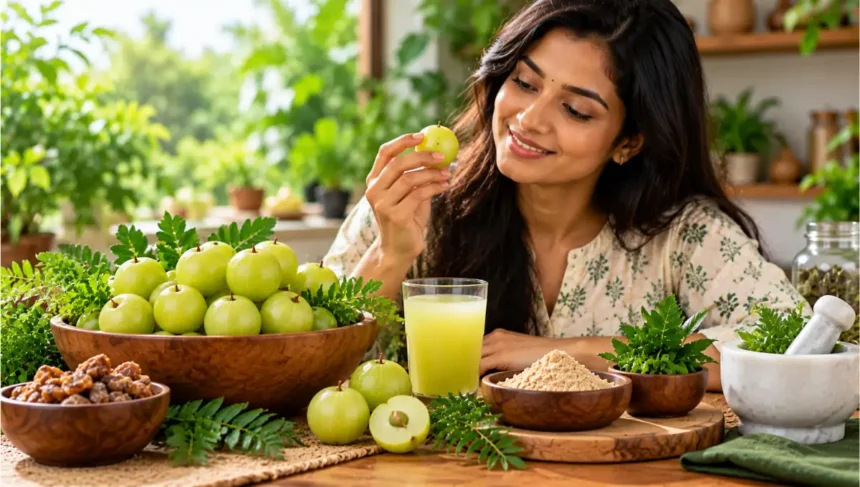
Amla Benefits: Nutrition, Ayurvedic Uses and Scientific Evidence
Ayurveda calls amla the best of all rejuvenating herbs. Modern labs have found it packed with vitamin C and polyphenols. But how well do the ancient claims match the research? This guide puts the Ayurvedic view and the scientific evidence side by side, benefit by benefit.
Few plants are as respected in Indian tradition as amla. In Sanskrit it is called amalaki, and also dhatri, meaning "nurse" or "mother," because it was believed to care for the body the way a mother cares for a child. It is a key ingredient in Triphala and Chyawanprash, two of the most widely used Ayurvedic preparations in India today.
Ayurveda credits amla with supporting immunity, digestion, eyesight, hair, skin, and long life. Modern science has spent the last few decades testing these ideas in laboratories and, increasingly, in human trials. Some claims hold up well, some show early promise, and some still lack strong evidence. Below, we explain amla's nutrition and active compounds, what Ayurveda says about it, and an honest review of the science for each major benefit. If you are mainly looking for everyday recipes and ways to eat amla, see our companion guide, Amla: Nutrition, Benefits and How to Eat It.
In Ayurveda, amla (amalaki) is a top rasayana (rejuvenating herb) that balances all three doshas, especially pitta. Science confirms it is very rich in vitamin C and polyphenols such as gallic acid, ellagic acid, and emblicanins, giving it strong antioxidant activity. Human trials offer the best support for improving cholesterol and triglycerides, with smaller studies suggesting benefits for blood sugar, blood vessel health, and acidity. Claims about hair, eyes, and anti-ageing rest mostly on tradition and lab research so far.
Amla at a Glance
| Detail | Information |
|---|---|
| Botanical name | Phyllanthus emblica (syn. Emblica officinalis) |
| Common names | Amla, Indian gooseberry, amalaki, dhatri, nellikai (Tamil/Kannada), usirikaya (Telugu), amloki (Bengali) |
| Part used | Mainly the fruit; also leaves, seeds, and bark in traditional medicine |
| Season | Fresh fruit mostly from November to February |
| Main forms | Fresh fruit, juice, powder (churna), murabba, Triphala, Chyawanprash, hair oil |
Amla Nutrition and Active Compounds
Amla is low in calories and fat, provides fibre, and is famous for its vitamin C. But researchers increasingly believe much of its health activity comes from its large family of polyphenols, which work alongside vitamin C.
1Vitamin C
Amla is one of the richest natural sources of vitamin C. Reported levels vary widely with variety, ripeness, and storage, but values in the range of several hundred to over a thousand milligrams per 100 grams of fresh fruit are commonly reported. Its tannins appear to help protect this vitamin C from breaking down, which may be why dried amla still retains a useful amount.
2Hydrolysable Tannins
Amla contains tannins such as emblicanin A and B, punigluconin, corilagin, chebulagic acid, and geraniin. These compounds give amla its astringent, puckering taste and much of its antioxidant power.
3Phenolic Acids and Flavonoids
Gallic acid and ellagic acid are among the best-studied compounds in amla. It also contains flavonoids such as quercetin, kaempferol, and rutin, which have anti-inflammatory and antioxidant effects in lab studies.
4Fibre and Minerals
Fresh amla provides a few grams of fibre per 100 grams, along with small amounts of calcium, iron, and potassium.
A 2023 comprehensive review in Frontiers in Pharmacology catalogued the major bioactive compounds in Phyllanthus emblica, including hydrolysable tannins (emblicanin A and B, corilagin, geraniin, chebulagic acid), phenolic acids (gallic and ellagic acid), flavonoids (quercetin, kaempferol, rutin), and vitamin C at roughly 600 to 1,300 mg per 100 g of fruit. The review described antioxidant, anti-inflammatory, blood sugar-lowering, and lipid-lowering effects, mostly from laboratory and animal studies, and highlighted the need for more well-designed human trials.
Amla in Ayurveda
In Ayurveda, amla holds a special place. The Charaka Samhita, one of the foundational texts of Ayurveda, describes amalaki as the best among herbs that preserve youth and slow ageing (vayasthapana). It is classed as a premier rasayana, a rejuvenating substance believed to nourish all body tissues (dhatus), strengthen immunity (ojas), and support long life.
✓Ayurvedic Properties of Amalaki
| Ayurvedic Property | Amalaki | What It Means |
|---|---|---|
| Rasa (taste) | Five tastes: sour (main), sweet, bitter, pungent, astringent; lacks only salty | Considered unusually complete and balancing |
| Guna (qualities) | Guru (heavy), ruksha (dry), sheeta (cool) | Nourishing yet light on digestion when taken in normal amounts |
| Virya (potency) | Sheeta (cooling) | Calms heat, acidity, and inflammation (pitta) |
| Vipaka (post-digestive effect) | Madhura (sweet) | Nourishing and building over time |
| Dosha action | Tridosha shamaka, especially pitta | Suitable for most body types |
An interesting point in Ayurvedic thinking is that amla is sour but cooling. Most sour foods are considered heating and can aggravate pitta, yet amla is believed to calm it. This is one reason it is traditionally recommended for acidity, burning sensations, and heat-related problems.
✓Traditional Ayurvedic Actions (Karma)
- Rasayana: Rejuvenating and anti-ageing
- Chakshushya: Good for the eyes
- Keshya: Supports healthy hair
- Twachya and varnya: Improves skin and complexion
- Deepana and anulomana: Supports digestion and regular bowel movements
- Hridya: Good for the heart
- Vrishya: Supports reproductive health and vitality
- Pramehaghna: Traditionally used in prameha, a group of urinary and metabolic disorders that includes what we now call diabetes
Classical Ayurvedic Formulations With Amla
1Triphala
Triphala is a blend of three fruits: amalaki, haritaki, and bibhitaki. It is one of the most widely used Ayurvedic remedies, traditionally taken for constipation, digestive health, and gentle detoxification. Small clinical studies suggest it can help with constipation, though larger, high-quality trials are still needed.
2Chyawanprash
Chyawanprash is a herbal jam with amla as its main ingredient, combined with dozens of other herbs, ghee, honey, and sugar or jaggery. It is traditionally taken in winter for immunity and strength. Keep in mind that most commercial versions contain a lot of sugar, so people with diabetes should choose sugar-free versions and check with their doctor.
3Amalaki Rasayana and Dhatri Lauha
Amalaki rasayana is made by repeatedly processing amla powder with its own juice and is used as a rejuvenating tonic. Dhatri lauha combines amla with iron and is traditionally used for anaemia and acidity.
4Amla Hair Oils
Amla is infused into coconut or sesame oil, sometimes with bhringraj or brahmi, in traditional preparations used to nourish the scalp and hair.
Want more guides that compare Ayurvedic tradition with modern research?
Explore More on HealthzeetAmla Benefits: Ayurveda vs Scientific Evidence
For each benefit below, we show what Ayurveda traditionally says, what modern research has found, and an overall verdict on the strength of the evidence.
1Cholesterol and Heart Health
Ayurveda says: Amla is hridya, good for the heart.
Science says: This is one of the best-supported benefits. Several randomised trials have found that amla extract can lower total cholesterol, LDL cholesterol, and triglycerides in people with high levels.
A randomised, double-blind, placebo-controlled trial published in BMC Complementary and Alternative Medicine in 2019 tested 500 mg of amla extract twice daily for 12 weeks in 98 adults with dyslipidaemia. Compared with placebo, the amla group had significantly greater reductions in total cholesterol, LDL, VLDL, and triglycerides, and a 39 percent drop in the atherogenic index of plasma, a marker of heart disease risk.
Small trials have also suggested that amla may improve the function of the inner lining of blood vessels (endothelial function) and lower markers of oxidative stress and inflammation in people with type 2 diabetes. Verdict: Moderate evidence. Promising, but trials used standardised extracts, and amla should not replace prescribed medication.
2Blood Sugar Control
Ayurveda says: Amla is used in prameha, including madhumeha (diabetes), often combined with turmeric.
Science says: Animal studies show amla can lower blood sugar, possibly by slowing carbohydrate digestion and improving insulin signalling. A few small human studies have reported lower fasting and post-meal blood sugar with amla powder, but the trials were short and small. Verdict: Early to moderate evidence. A helpful food for people with diabetes, but monitor blood sugar if you take medication.
3Acidity and Digestive Health
Ayurveda says: Amla's cooling potency calms pitta, making it a traditional remedy for amlapitta (hyperacidity) and burning sensations.
Science says: A small randomised trial in people with reflux reported fewer heartburn and regurgitation episodes with amla tablets compared with placebo. Animal studies suggest amla may protect the stomach lining. Triphala, which contains amla, has some clinical support for constipation. Verdict: Early evidence. Interestingly, while Ayurveda uses amla for acidity, some people find fresh amla on an empty stomach triggers heartburn, so individual response varies.
4Immunity
Ayurveda says: As a rasayana, amla builds ojas, the essence of strength and immunity.
Science says: Vitamin C is essential for immune cell function, and amla is a rich source. Lab studies show amla extracts can affect immune cell activity. However, there are few human trials showing amla prevents infections. Verdict: Supported indirectly through vitamin C. A good way to meet vitamin C needs, not a guaranteed shield against illness.
5Antioxidant and Anti-Ageing Effects
Ayurveda says: Amla is the best vayasthapana herb, slowing the effects of ageing.
Science says: Amla has very strong antioxidant activity in lab tests, and small human studies have shown improvements in markers of oxidative stress. Whether this slows ageing in people has not been proven. Verdict: Strong lab evidence, limited human evidence.
6Hair Health
Ayurveda says: Amla is keshya, nourishing the hair and preventing early greying.
Science says: Lab and animal research suggests amla extracts may support hair follicle activity, and vitamin C helps absorb iron, which matters for hair growth. Good-quality human trials showing that amla oil or amla supplements reduce hair fall or greying are lacking. Verdict: Mostly traditional. Amla oil is safe for most people to try, but expectations should be realistic.
7Skin Health
Ayurveda says: Amla improves complexion (varnya) and skin quality.
Science says: Vitamin C is needed to make collagen, and amla's antioxidants may help protect skin cells from sun and pollution damage in lab studies. Human data are limited. Verdict: Plausible, early evidence.
8Eye Health
Ayurveda says: Amla is chakshushya, good for the eyes, and Triphala eyewash is a traditional practice.
Science says: Antioxidants and vitamin C support eye health generally, and some animal studies suggest amla may protect the lens. There are no strong human trials. Never put homemade herbal preparations into your eyes without medical advice. Verdict: Traditional, not yet proven.
9Liver Protection
Ayurveda says: Amla supports the liver and helps clear excess pitta.
Science says: Animal studies show amla protects the liver from damage caused by alcohol, toxins, and high-fat diets. Human trials are few. Note that some multi-herb Ayurvedic products have been linked to liver problems, so quality matters. Verdict: Early evidence.
10Iron Absorption and Anaemia
Ayurveda says: Amla is combined with iron in Dhatri lauha for pandu (anaemia).
Science says: Vitamin C is well known to improve absorption of iron from plant foods. Eating amla alongside iron-rich vegetarian meals is a sensible, science-backed habit. Verdict: Well supported for absorption.
Amla Benefits: Evidence Summary
| Benefit | Ayurvedic Term | Strength of Scientific Evidence |
|---|---|---|
| Cholesterol and triglycerides | Hridya | Moderate (several human trials) |
| Iron absorption | Used in pandu | Well supported (via vitamin C) |
| Antioxidant activity | Rasayana, vayasthapana | Strong in lab, limited in humans |
| Blood sugar | Pramehaghna | Early to moderate |
| Blood vessel function | Hridya | Early (small trials) |
| Acidity and reflux | Amlapitta relief | Early (small trials) |
| Immunity | Ojas-building | Indirect, via vitamin C |
| Liver protection | Pitta-clearing | Early (mostly animal studies) |
| Skin | Varnya, twachya | Early |
| Hair | Keshya | Mostly traditional |
| Eyes | Chakshushya | Traditional, not proven |
How to Take Amla the Ayurvedic Way
Ayurveda pays close attention not just to what you take, but how and with what. The carrier substance is called anupana.
- Fresh amla: Eat one fresh fruit in season, plain or with a little rock salt. This gives the most vitamin C.
- Amla churna (powder) with warm water: A common way to take it daily, often in the morning.
- With honey: Traditionally used to balance kapha and make the taste easier. Mix with lukewarm, not hot, water.
- With ghee: Traditionally recommended for pitta and vata types and as a rasayana. Use only a small amount.
- Triphala at night: Often taken with warm water before bed for digestion and regularity.
- Chyawanprash in winter: One teaspoon with warm milk, keeping the sugar content in mind.
- Amla juice: 15 to 30 ml diluted in water. Choose juice without added sugar.
For more everyday food ideas, such as amla chutney, pickle, and dried amla supari, see our guide on how to eat amla.
Choosing a Quality Amla Product
Because amla is so popular, the market is full of powders, juices, capsules, and blends. Quality varies a lot, so a little checking goes a long way.
- Single ingredient: For amla powder, the label should list 100 percent amla (Emblica officinalis or Phyllanthus emblica) with no fillers, sugar, or colours.
- Licensing: Look for a valid FSSAI licence for food products, or an AYUSH licence for Ayurvedic medicines.
- Testing: Brands that test for heavy metals and microbes, and share results, are more trustworthy.
- Freshness: Check manufacturing and expiry dates. Powder should smell fresh and tangy, not musty.
- Sugar content: Murabba, candy, and many Chyawanprash brands are high in sugar.
Long-established herbal houses that focus on single-herb powders make this easier. ACTIZEET®, for instance, has been making traditional herbal powders, including amla, since 1996, and is one of several Indian brands buyers can compare on purity and sourcing.
How Much Amla Should You Take?
There is no official dose, but these amounts are commonly used in traditional practice and research:
| Form | Typical Daily Amount |
|---|---|
| Fresh amla | 1 to 2 fruits |
| Amla powder (churna) | 3 to 6 g (about 1 to 2 teaspoons), often split into two doses |
| Amla juice | 15 to 30 ml diluted in water |
| Standardised extract (capsules) | As per label; clinical trials often used 500 mg twice daily |
| Triphala | 3 to 5 g at bedtime, or as advised |
| Chyawanprash | 1 to 2 teaspoons |
Start with a lower amount and increase gradually. For long-term or therapeutic use, it is best to consult a qualified Ayurvedic practitioner or doctor.
Side Effects and Precautions
RxList, a WebMD-owned medicines and supplements reference, notes that Indian gooseberry is likely safe when eaten in food amounts. It advises caution for people with bleeding disorders and recommends stopping amla at least two weeks before surgery, since it may slow blood clotting. It also notes that amla may lower blood sugar, so people on diabetes medicines should monitor their levels, and that reliable safety information for pregnancy and breastfeeding is lacking.
- Acidity: Despite its traditional use for acidity, fresh amla or juice on an empty stomach may cause heartburn in some people. Take it after food if this happens.
- Loose stools: High doses, especially of Triphala, can cause loose motions or cramps.
- Blood thinners: Talk to your doctor if you take aspirin, warfarin, clopidogrel, or similar medicines.
- Diabetes medicines: Amla may add to their effect, so monitor your sugar levels.
- Surgery: Stop amla supplements at least two weeks before planned surgery.
- Pregnancy and breastfeeding: Food amounts are generally fine, but avoid concentrated supplements without medical advice.
- Ayurvedic considerations: Because amla is cooling and drying, Ayurvedic practitioners may suggest taking it with honey or warm water during cold, damp weather or a heavy cough, and with ghee for very dry constitutions.
- Product quality: Buy from licensed brands, since some poorly made herbal products have been found to contain contaminants.
Frequently Asked Questions
Where Ancient Wisdom and Modern Science Agree
Ayurveda has honoured amla for thousands of years as a rasayana that rejuvenates the body, calms pitta, and supports the heart, digestion, eyes, hair, and skin. Modern science has confirmed that amla is exceptionally rich in vitamin C and polyphenols with strong antioxidant activity, and human trials support its role in improving cholesterol and triglycerides. Evidence for blood sugar, blood vessel health, and acidity is encouraging, while many traditional claims about hair, eyes, and ageing still await stronger proof.
The practical takeaway is simple. Fresh amla in season, a spoon of pure amla powder, or a classic preparation like Triphala can be a valuable part of a healthy routine. Choose clean, licensed products, start with moderate amounts, and talk to your doctor if you take blood thinners or diabetes medicines, are pregnant, or plan to use amla therapeutically.
Amla Benefits: Nutrition, Ayurvedic Uses and Scientific Evidence
Amla in Ayurveda vs. modern science: nutrition, rasayana uses, Triphala and Chyawanprash,…
Ashwagandha Benefits: Traditional Uses, Research and Safety
Explore ashwagandha's traditional Ayurvedic uses and what current research says about stress,…