


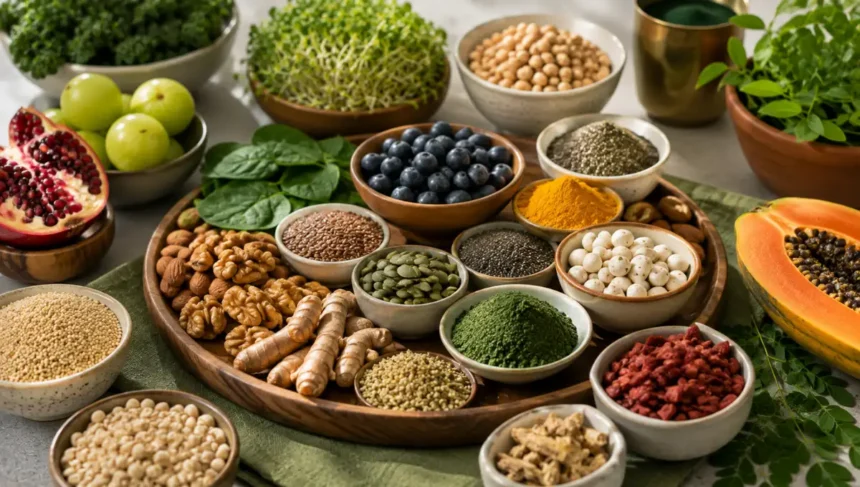
15 Nutrient-Dense Indian Superfoods Worth Adding to Your Diet
Long before the word "superfood" existed, Indian kitchens were already built around ingredients dense in fiber, antioxidants, and essential nutrients, turmeric in the dal, curd with every meal, greens cooked with garlic and cumin. This list breaks down 15 traditional Indian foods with genuine nutritional value, what the research actually says about each, and simple ways to add them to your routine.
The term "superfood" is more marketing language than scientific classification, no single food can single-handedly transform your health. What is genuinely true, though, is that many staples of traditional Indian cooking are unusually nutrient-dense, offering fiber, plant protein, iron, antioxidants, and micronutrients well beyond their calorie count.
Below are 15 such foods, many already sitting in most Indian kitchens, along with what current research says about each one and how they fit into a balanced diet.
Traditional Indian staples tend to combine whole grains, legumes, fermented dairy, and a wide range of spices and greens, a pattern nutrition researchers consistently associate with better fiber intake, gut health, and micronutrient coverage. None of these foods work as a stand-alone fix, but together they form a nutrient-dense foundation that has supported diets across the subcontinent for generations.
1. Turmeric (Haldi)
Turmeric is the golden spice behind much of Indian cooking, and its active compound, curcumin, has been researched more extensively than almost any other spice.
The NIH's National Center for Complementary and Integrative Health notes that while turmeric has a long history of traditional use, there is still insufficient evidence to draw firm conclusions about its benefits for most health purposes, though initial research on osteoarthritis symptoms shows some positive signals that need higher-quality studies to confirm. The center also cautions that highly bioavailable curcumin supplements, as opposed to turmeric used in food, have been linked to rare cases of liver injury.
This does not make turmeric useless, it simply means the dramatic health claims often attached to it outpace the current evidence. Used the traditional way, as a cooking spice alongside black pepper, which improves absorption, turmeric remains a reasonable, low-risk addition to a varied diet.
2. Moringa (Drumstick Leaves)
Moringa, known as drumstick leaves or sahjan in many Indian households, has earned genuine attention from nutrition researchers for its unusually dense micronutrient profile.
A comprehensive review published through the National Library of Medicine describes moringa leaves as containing vitamin A, B-complex vitamins, vitamin C, and vitamin E, along with calcium, potassium, iron, and zinc, noting the plant's vitamin C content in particular supports immune function and helps prevent scurvy. The review identifies moringa as a genuine nutrient-dense food rather than simply a trendy label.
Moringa leaves are traditionally cooked into a simple sabzi or added to dal, and moringa powder can be stirred into soups or smoothies for an easy nutrient boost.
3. Amla (Indian Gooseberry)
Amla is one of the richest natural sources of vitamin C available, far exceeding citrus fruits gram for gram, along with polyphenols that support its reputation in Ayurvedic tradition as a rejuvenating food.
Amla can be eaten fresh, though its sharp tartness leads most people to prepare it as murabba, pickled, dried into candy, or juiced with a touch of honey. Even small daily amounts contribute meaningfully to vitamin C intake, which supports collagen production, iron absorption, and immune function.
4. Ragi (Finger Millet)
Ragi is a small, nutrient-dense millet that has been a staple across South India for centuries, valued particularly for its calcium content, unusually high for a grain.
The Food and Agriculture Organization of the United Nations, which led the 2023 International Year of Millets, describes millets as rich sources of dietary fiber, protein, minerals, and antioxidants, noting their fiber content plays a key role in regulating blood sugar, digestion, and hunger levels. The FAO specifically highlighted millets, including ragi, as a cost-effective way to address nutritional gaps, particularly iron deficiency, in vulnerable populations.
Ragi flour is commonly used for porridge, dosas, and rotis, offering a naturally gluten-free, fiber-rich alternative to refined wheat flour that also digests more slowly, supporting steadier blood sugar.
Want more practical, research-backed nutrition guides like this one?
Explore More on HealthZeet5. Lentils (Dal)
Lentils are a cornerstone of Indian cooking and one of the most reliable plant-based protein sources available, combining protein, fiber, iron, and folate in a single, affordable ingredient.
Different varieties, moong, masoor, toor, chana, each bring slightly different nutrient profiles and textures, making it easy to rotate through the week for variety. A simple bowl of dal alongside rice or roti also naturally combines plant proteins into a more complete amino acid profile.
6. Curd (Dahi)
Curd, a fermented dairy staple in nearly every Indian meal, provides calcium, protein, and live bacterial cultures that support gut health, similar to yogurt but with its own distinct fermentation process and texture.
Eating curd regularly, whether alongside meals or as raita, is a simple, accessible way to support digestive health, particularly when paired with fiber-rich foods that feed the same beneficial bacteria curd helps introduce.
7. Fenugreek Seeds (Methi)
Fenugreek seeds carry a distinct bitterness and have long been used in Indian households for both cooking and traditional remedies, particularly around blood sugar and digestion.
Soaked fenugreek seeds, sprouted methi, or the seeds tempered into dal and vegetables are all common ways to include them. Their fiber content contributes to the slower digestion that many traditional preparations of methi are valued for.
8. Garlic (Lahsun)
Garlic is used in nearly every Indian regional cuisine, and beyond flavor, it contains sulfur compounds studied for their potential cardiovascular and immune-related properties.
Cooking garlic at the start of a dish, the traditional tadka method, releases its aromatic compounds fully, while eating it raw or lightly cooked preserves more of its beneficial compounds if that is a specific goal.
9. Ghee
Ghee, clarified butter, is a traditional cooking fat that has moved from being viewed with caution to renewed interest, largely due to its stability at high cooking temperatures and content of fat-soluble vitamins A, D, E, and K.
Used in moderation rather than as a primary fat source, ghee fits reasonably within a balanced diet, particularly for high-heat cooking where its smoke point offers an advantage over some other traditional fats.
10. Spinach (Palak)
Spinach, or palak, is a leafy green rich in iron, folate, vitamin A, and antioxidants, and it appears throughout Indian cooking in dishes like palak paneer and saag.
Pairing spinach with a source of vitamin C, like tomatoes or a squeeze of lemon, improves the absorption of its non-heme iron, a practical detail worth keeping in mind for anyone managing iron intake through plant sources.
11. Black Pepper (Kali Mirch)
Black pepper contains piperine, a compound studied for its ability to enhance the absorption of other nutrients, most notably curcumin from turmeric, which is part of why the two spices are so frequently used together in Indian cooking.
A pinch of black pepper added to turmeric-based dishes, or simply used as a general seasoning, is a simple, evidence-supported pairing rooted in traditional practice.
12. Cumin (Jeera)
Cumin seeds are a foundational spice in Indian cooking, typically tempered in oil or ghee at the start of a dish, and they contribute antioxidant compounds along with a traditional reputation for supporting digestion.
Cumin water, made by soaking or lightly boiling the seeds, is a common home remedy for digestive discomfort across Indian households, though it works best as a complement to a fiber-rich diet rather than a stand-alone fix.
13. Tulsi (Holy Basil)
Tulsi, or holy basil, holds a distinct place in Indian households, often grown in courtyards and used in both cooking and traditional herbal preparations, particularly as a tea for cold and cough symptoms.
Fresh or dried tulsi leaves steeped in hot water make a simple, caffeine-free tea that many people incorporate into a daily wellness routine, alongside its traditional use in immune-supportive preparations.
14. Jaggery (Gur)
Jaggery, an unrefined sugar made from sugarcane or palm sap, retains small amounts of minerals like iron and magnesium that are stripped out during the refining process used for white sugar.
It is still a form of added sugar and should be used in moderation rather than viewed as a health food, but as an occasional substitute for refined white sugar, it offers a marginally more nutrient-retentive option within traditional Indian sweets and preparations.
15. Sesame Seeds (Til)
Sesame seeds are a concentrated source of calcium, healthy fats, and minerals like magnesium and zinc, commonly used in winter preparations across India, from til laddoos to chikki.
A small daily serving, sprinkled over vegetables or blended into chutneys, adds meaningful nutrition without requiring a significant change to typical meal patterns.
Quick Reference: 15 Foods at a Glance
| Food | Key Nutrients | Traditional Use |
|---|---|---|
| Turmeric | Curcumin, antioxidants | Cooking spice, tempered dishes |
| Moringa | Vitamin C, iron, calcium | Sabzi, dal, powder in smoothies |
| Amla | Vitamin C, polyphenols | Murabba, pickle, juice |
| Ragi | Calcium, fiber | Porridge, dosa, roti |
| Lentils (dal) | Plant protein, iron, folate | Everyday staple with rice or roti |
| Curd | Calcium, probiotics | Side dish, raita |
| Fenugreek seeds | Fiber, plant compounds | Tempering, sprouted, soaked |
| Garlic | Sulfur compounds | Tadka, curries |
| Ghee | Fat-soluble vitamins | Cooking fat, tempering |
| Spinach | Iron, folate, vitamin A | Palak paneer, saag |
| Black pepper | Piperine | Seasoning, paired with turmeric |
| Cumin | Antioxidants | Tempering, cumin water |
| Tulsi | Traditional immune support | Tea, herbal preparations |
| Jaggery | Trace iron, minerals | Sweetener alternative |
| Sesame seeds | Calcium, healthy fats | Laddoos, chutneys, chikki |
Frequently Asked Questions
Traditional Foods, Genuinely Worth Keeping on the Plate
Many of the foods on this list were never marketed as superfoods, they were simply what Indian households cooked with for generations, often for practical reasons of availability, flavor, and digestibility. What modern nutrition research adds is context for why so many of these choices hold up: dense fiber and micronutrient content, thoughtful pairings like turmeric with black pepper, and fermented staples like curd that support gut health.
You do not need to overhaul your diet to benefit from this list. Leaning further into what is likely already familiar, more dal, more curd, a wider rotation of millets and greens, tends to be a more sustainable path than chasing any single trending ingredient.

Amla: Nutrition, Benefits and How to Eat It
Discover amla benefits for immunity, hair, skin, digestion and cholesterol, its nutrition…
15 Nutrient-Dense Indian Superfoods Worth Adding to Your Diet
Discover 15 nutrient-dense Indian superfoods, from turmeric and moringa to ragi and…
