



Traditional Indian Diet: Is It Actually Healthy?
Dal, sabzi, roti, curd, and a pinch of haldi in everything. Many of us grew up believing ghar ka khana is the healthiest food there is. Yet India now has one of the highest rates of diabetes in the world. So which is it? This guide looks at what the traditional Indian diet gets right, where modern Indian eating goes wrong, and what the latest research says.
Ask ten people whether Indian food is healthy and you will get ten different answers. Some will praise its lentils, vegetables, and spices. Others will point to fried samosas, sweet chai, mountains of rice, and ghee-laden parathas. Both groups are partly right.
The truth is that the traditional Indian diet, as our grandparents ate it, has many real strengths. But the way most Indians eat today has drifted far from that pattern. Portions are bigger, grains are more refined, protein is low, and packaged snacks and sugar have crept into daily life. Research from the Indian Council of Medical Research (ICMR) now shows clearly how these changes are linked to rising diabetes and obesity. Below, we separate the healthy traditions from the modern habits, bust a few common myths, and share simple ways to make your everyday Indian meals work harder for your health.
Yes, at its core. A traditional Indian diet built on whole grains and millets, dal and pulses, seasonal vegetables, curd, spices, and home cooking is a healthy, mostly plant-based pattern. The problem is how many Indians eat today: about 62% of calories from carbohydrates, mostly refined cereals and sugar, only about 12% from protein, and too much saturated fat, salt, and fried or packaged food. Eating less white rice and maida, more dal, curd, eggs or fish, and vegetables, and fewer fried snacks and sweets brings the Indian diet back to its healthy roots.
What Is the "Traditional Indian Diet"?
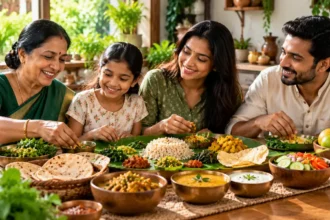
There is no single Indian diet. India's food is as varied as its languages. A Punjabi farmer, a Bengali fisherman, a Tamil temple cook, and a Rajasthani villager have very different plates. Still, most traditional Indian diets share a common structure:
- A staple grain: wheat in the north, rice in the south and east, and millets like bajra, jowar, and ragi in the west, centre, and parts of the south.
- Pulses and legumes: dal, rajma, chole, moong, urad, and many more, eaten daily.
- Seasonal vegetables and greens: cooked as sabzi, poriyal, thoran, saag, or added to dal and sambar.
- Dairy: curd, buttermilk, milk, paneer, and small amounts of ghee.
- Spices and herbs: turmeric, cumin, coriander, mustard seeds, ginger, garlic, curry leaves, and more.
- Fish, eggs, or meat in many coastal, eastern, northeastern, and non-vegetarian households.
Traditionally, meals were cooked fresh at home from local, seasonal ingredients, with sweets and fried foods kept for festivals and special occasions. People were also far more physically active, walking, farming, and doing household work by hand.
What the Traditional Indian Diet Gets Right
1It Is Mostly Plant-Based
Traditional Indian meals are rich in vegetables, pulses, whole grains, nuts, and seeds. Diets built around plant foods are consistently linked with lower risks of heart disease, type 2 diabetes, and some cancers. India has one of the largest vegetarian populations in the world, and a well-planned vegetarian diet can be very healthy.
2Dal and Grain Make a Complete Protein
Cereals are low in the amino acid lysine, while pulses are low in methionine. Eaten together, as in dal chawal, rajma rice, khichdi, idli sambar, or roti with dal, they provide a much more complete set of essential amino acids. Our ancestors figured this out long before nutrition science did.
3High in Fibre
Pulses, whole wheat, millets, vegetables, and fruits give traditional diets plenty of fibre. Fibre supports digestion, feeds healthy gut bacteria, slows sugar absorption, and helps you stay full.
4Spices With Real Benefits
Indian cooking uses spices every day, not just as a garnish. Turmeric contains curcumin, ginger contains gingerols, and garlic, cumin, fenugreek, cinnamon, and black pepper each bring their own plant compounds. Research on these spices is promising for inflammation, digestion, and blood sugar, though the amounts in food are modest. Their biggest benefit may be making vegetables and dal taste great without heavy sauces.
5Fermented Foods for Gut Health
Curd, buttermilk (chaas), idli, dosa, dhokla, appam, kanji, and northeastern fermented foods are natural sources of beneficial bacteria. Fermentation also makes some nutrients easier to absorb.
6Millets: The Original Indian Grains
Before polished rice and refined wheat became everyday staples, many Indians ate ragi, jowar, bajra, kodo, foxtail, and little millets. These grains are rich in fibre and minerals. Ragi is an excellent source of calcium, and bajra provides iron.
7Seasonal and Local Eating
Traditional diets changed with the seasons: greens like sarson and bathua in winter, gourds and mangoes in summer. Seasonal produce is fresher, cheaper, and often more nutritious.
8The Balanced Thali
A traditional thali includes a grain, dal, one or two vegetables, curd, salad or kachumber, and a small portion of pickle or chutney. Done right, it naturally covers most food groups in one meal.
Where Modern Indian Eating Goes Wrong
The traditional pattern is healthy. The problem is that most Indian diets today look quite different.
- Too many refined carbohydrates: Polished white rice, maida, white bread, biscuits, and noodles have replaced millets and whole grains, and portions of rice or roti are often large.
- Too little protein: Many plates have a big mound of rice or a stack of rotis with a small katori of dal. Protein often falls well short of needs.
- More sugar: Sweet chai several times a day, packaged juices, soft drinks, and frequent mithai add up.
- Fried snacks: Samosas, pakoras, bhujia, and chips have moved from festival treats to daily habits.
- Too much salt: Pickles, papad, namkeen, packaged snacks, and restaurant food push salt intake well above recommended limits.
- Reused and unhealthy fats: Deep frying in reused oil, vanaspati, and heavy use of ghee or butter in restaurant-style food increase unhealthy fats.
- Ultra-processed foods: Instant noodles, ready-to-eat snacks, and sugary breakfast cereals are now common, especially in cities.
- Less movement: Our grandparents could handle more rice and ghee because they were far more active. Desk jobs and screen time have changed the equation.
Want more practical, research-backed guides for healthier Indian eating?
Explore More on HealthzeetWhat the Latest Research Shows
India's health statistics show why diet matters so much. The ICMR-INDIAB study, published in The Lancet Diabetes & Endocrinology in 2023, estimated that more than 101 million Indians have diabetes and about 136 million more have prediabetes. A large follow-up analysis looked closely at what Indians are actually eating.
A nationwide study of more than 121,000 adults across all Indian states and union territories, published in Nature Medicine in 2025 as part of the ICMR-INDIAB study, found that about 62 percent of daily calories came from carbohydrates, mostly refined cereals and added sugars. Protein made up only about 12 percent of energy, almost entirely from plant sources, while saturated fat intake was above recommended limits in most states. Higher carbohydrate intake was linked to a 14 percent greater likelihood of newly diagnosed type 2 diabetes. Simply switching from refined grains to whole wheat or millet flour was not enough; the researchers found that replacing about 5 percent of calories from carbohydrates with plant, dairy, egg, or fish protein was linked to lower diabetes risk.
This is an important finding. It means the issue is not just which grain Indians eat, but how much of the plate is grain. Swapping white rice for brown rice helps a little, but eating less grain and more protein and vegetables matters more.
In its 2024 Dietary Guidelines for Indians, the ICMR-National Institute of Nutrition estimated that 56.4 percent of India's total disease burden is due to unhealthy diets. The guidelines recommend getting no more than 45 percent of calories from cereals and millets, up to 15 percent from pulses, beans, and meat, and the rest from vegetables, fruits, nuts, and milk. They also advise keeping added sugar below 5 percent of total energy, limiting total fat to about 30 percent of energy, restricting salt, reducing saturated fats such as ghee and palm oil, and minimising ultra-processed foods.
Put the two together and the message is clear. The average Indian plate today is about 62 percent carbohydrate, while ICMR-NIN suggests cereals should make up no more than 45 percent of calories. Closing that gap, mainly by adding more dal, vegetables, dairy, eggs, or fish, is the single biggest improvement most Indian families can make.
Traditional vs Modern Indian Diet
| Aspect | Traditional Pattern | Common Modern Pattern |
|---|---|---|
| Grains | Millets, hand-pounded rice, whole wheat | Polished rice, maida, white bread |
| Portion of grain | Moderate, balanced with dal and sabzi | Large, often the main part of the plate |
| Protein | Dal, curd, buttermilk daily; fish or eggs in many regions | Small katori of dal; protein often low |
| Vegetables | Seasonal sabzi, greens, local produce | Fewer vegetables, more potato |
| Fats | Mustard, groundnut, sesame, coconut oil, small amounts of ghee | Reused frying oil, vanaspati, heavy restaurant fats |
| Sweets and snacks | Festivals and special occasions | Daily biscuits, namkeen, mithai, sweet chai |
| Cooking | Fresh, home-cooked | More takeaway, packaged, and instant food |
| Activity | High daily physical work | Mostly sedentary |
Regional Indian Diets: Strengths and Watch-Outs
| Region | Strengths | Watch-Outs |
|---|---|---|
| North | Whole wheat roti, rajma, chole, saag, curd, lassi | Heavy ghee and butter, parathas, fried snacks, sweets |
| South | Fermented idli and dosa, sambar, rasam, vegetables, coconut, curry leaves | Large white rice portions, refined batters, fried snacks |
| East | Fish, mustard oil, leafy shaak, lentils | Big rice servings, sugary sweets like rasgulla and sandesh |
| West | Bajra and jowar rotis, dals, kadhi, dhokla, buttermilk | Added sugar in dal and sabzi, farsan and fried snacks |
| Northeast | Steamed and boiled dishes, fermented foods, greens, bamboo shoots, local fish and meat | Salted and smoked meats, high-salt fermented products |
Common Myths About Indian Food
✓Myth: "Rice Causes Diabetes"
Rice alone does not cause diabetes. The problem is eating large portions of polished white rice with little protein, fibre, or vegetables, combined with low activity. A moderate portion of rice with plenty of dal, sambar, and vegetables is very different from a heaped plate with a little curry.
✓Myth: "Roti Is Always Healthier Than Rice"
Whole wheat roti has more fibre than white rice, but four or five rotis with little dal is still a high-carbohydrate meal. ICMR-INDIAB found that simply switching grain types did not cut diabetes risk much. Portion size and balance matter more than roti versus rice.
✓Myth: "Vegetarian Means Healthy"
A vegetarian diet can be excellent, but samosas, jalebis, white bread, and sweet chai are all vegetarian too. Vegetarians also need to plan protein, vitamin B12, iron, and omega-3s carefully.
✓Myth: "Ghee Is a Superfood" or "Ghee Is Poison"
Both are exaggerations. Ghee is a saturated fat. A teaspoon or two a day as part of a balanced diet is fine for most people, and it adds flavour. But pouring large amounts on every meal raises saturated fat intake, which ICMR-NIN advises limiting. Moderation is the honest answer.
✓Myth: "Millets Solve Everything"
Millets are nutritious and a great addition, but replacing white rice with the same large portion of millet does not fix a carbohydrate-heavy plate. Use millets as part of a balanced meal with plenty of protein and vegetables.
How to Make Your Indian Diet Healthier
You do not need to give up Indian food. You only need to bring it back into balance. These simple changes make a big difference.
1Rebalance the Plate
Fill half your plate with vegetables and salad, a quarter with dal, paneer, eggs, fish, or chicken, and a quarter with rice, roti, or millets. This mirrors ICMR-NIN's advice to keep cereals below 45 percent of calories.
2Double the Dal, Halve the Rice
Ask for a second katori of dal or sambar instead of a second helping of rice. Thicker dals and adding chana, rajma, or sprouts make meals more filling.
3Add Protein to Every Meal
Include curd, paneer, eggs, besan, sattu, soya, sprouts, fish, or chicken at breakfast, lunch, and dinner. A tea-and-biscuit breakfast is one of the easiest habits to upgrade.
4Bring Back Millets and Whole Grains
Use ragi, jowar, bajra, and other millets a few times a week, and choose whole wheat atta, hand-pounded or brown rice, and oats over maida and polished rice.
5Cut Sugar in Chai and Sweets
Reduce sugar in tea and coffee gradually, keep mithai for celebrations, and avoid sugary drinks and packaged juices. ICMR-NIN suggests keeping added sugar below 5 percent of daily calories.
6Fry Less, Choose Better Oils
Steam, roast, sauté, or pressure-cook more often. Rotate healthy oils like mustard, groundnut, sesame, and rice bran, measure oil with a spoon, and never reuse deep-frying oil repeatedly.
7Go Easy on Salt
Limit pickles, papad, namkeen, and packaged snacks. Use lemon, herbs, and spices for flavour, and taste food before adding extra salt.
8Keep the Good Traditions
Hold on to curd and buttermilk, fermented foods, seasonal greens, spices, and home cooking. These are the parts of the traditional diet that science supports most.
9Move More
Traditional diets worked partly because people were active. Aim for at least 150 minutes of moderate activity a week, such as brisk walking, cycling, yoga, or sport, plus some strength training.
Sample Healthy Traditional Indian Day
| Meal | What to Eat | Why It Works |
|---|---|---|
| Early morning | Water, a few soaked almonds or walnuts | Hydration and healthy fats |
| Breakfast | 2 moong dal or besan chillas with vegetables and mint chutney, or 2 idlis with a big bowl of sambar; tea with less sugar | Protein and fibre in the morning |
| Mid-morning | A seasonal fruit or a glass of buttermilk | Vitamins and probiotics |
| Lunch | 1 to 2 whole wheat or millet rotis or a small portion of rice, 1 to 2 katoris of dal or rajma, a vegetable sabzi, salad, and curd | Balanced thali, half vegetables |
| Evening snack | Roasted chana or makhana, sprouts chaat, or a boiled egg | Protein instead of fried snacks |
| Dinner | Vegetable khichdi with extra dal, or fish or paneer curry with sautéed greens and a small portion of rice | Lighter, protein-rich meal |
Frequently Asked Questions
Go Back to the Roots, Not Away From Indian Food
The traditional Indian diet is healthy at its heart. Whole grains and millets, dal and pulses, seasonal vegetables, curd and buttermilk, fermented foods, and everyday spices make up one of the world's great plant-based eating patterns. What has gone wrong is the modern version: oversized portions of refined grains, too little protein, too much sugar and salt, fried snacks, and far less movement.
The fix is not to abandon Indian food but to rebalance it. Eat less white rice and maida, more dal, vegetables, curd, eggs, or fish, bring back millets, cut sugar in your chai, fry less, and stay active. In other words, eat more like your grandparents did and move more like them too. If you have diabetes, heart disease, or another health condition, a registered dietitian can help you adapt these changes to your needs.
Traditional Indian Diet: Is It Actually Healthy?
Is the traditional Indian diet healthy? See what it gets right, where…

What Does a Healthy Indian Plate Look Like?
See what a healthy Indian plate actually looks like, based on ICMR-NIN…